

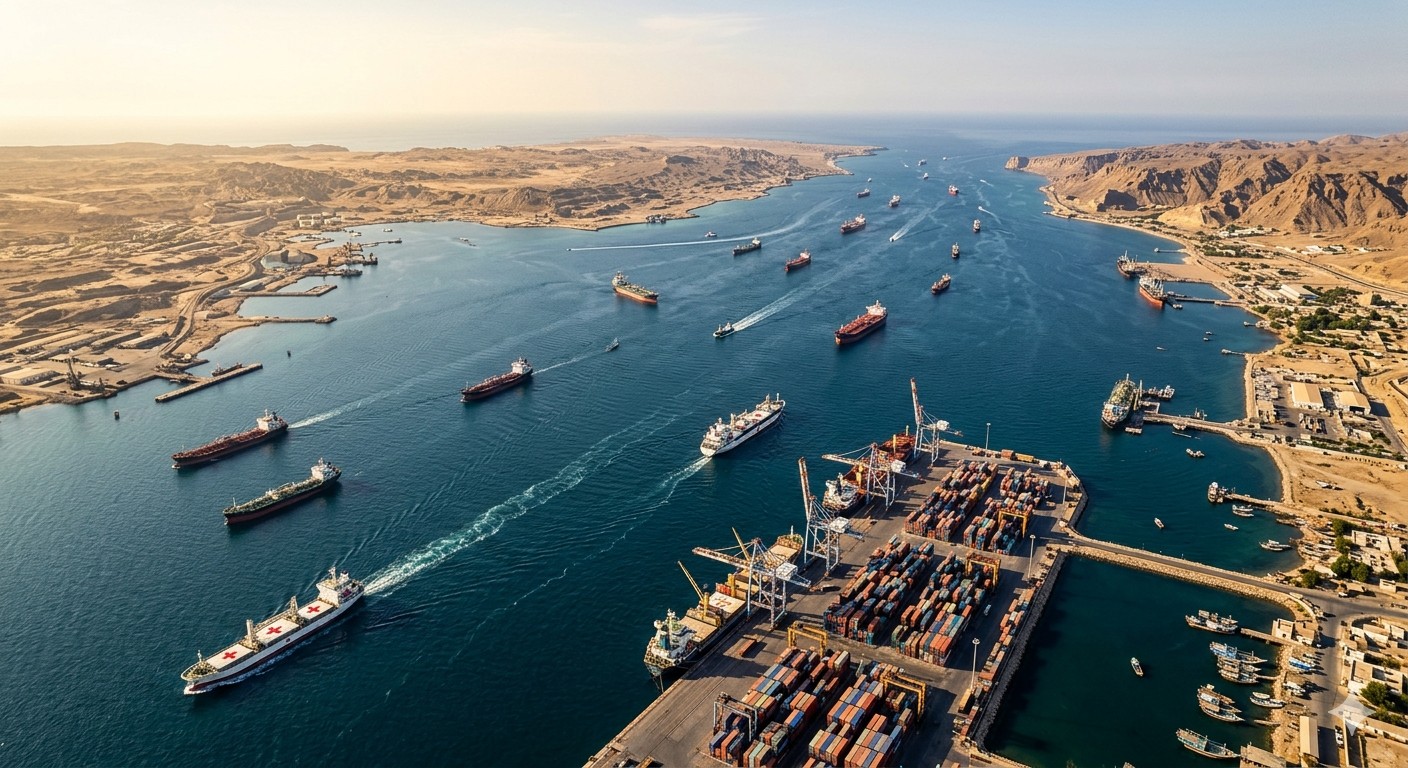
Tehran (April 17, 2026) – In a significant move aimed at easing regional tensions and promoting global trade, Iran has announced the full reopening of the strategic Strait of Hormuz for commercial ships. The announcement comes after a successful ceasefire in Lebanon, signaling a potential shift in the Middle East’s geopolitical landscape.
Iran’s Foreign Minister, Abbas Araqchi, took to social media platform X (formerly Twitter) to confirm the decision, stating that the Strait of Hormuz is now open to all commercial vessels. He emphasized that the route would remain fully operational throughout the duration of the ceasefire in Lebanon.
However, ships will be required to follow designated routes, which have been previously set by Iran’s port authorities and maritime agencies.
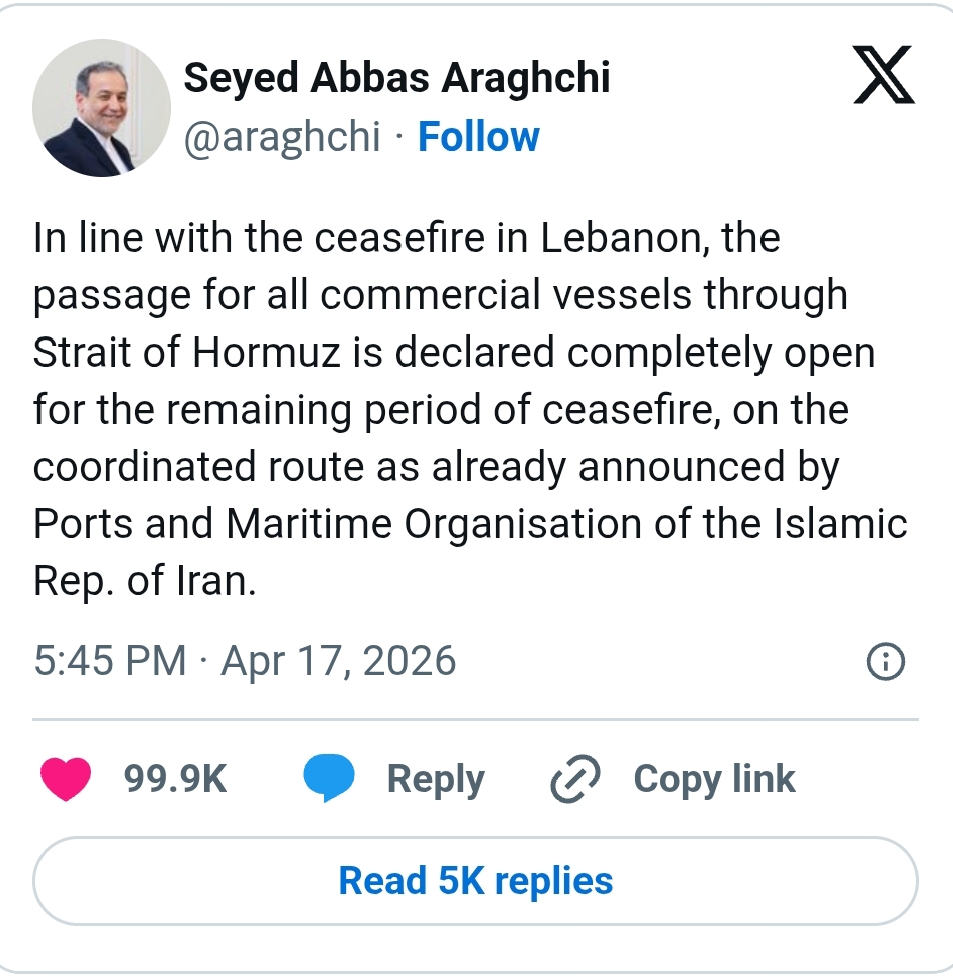
The move aims to reduce tensions in the region and help resume vital global trade flows, particularly those related to energy resources. Araqchi explained that this step was taken to promote regional stability and facilitate the smooth functioning of international trade in the critical shipping lane.
The Strait of Hormuz holds immense strategic significance as it connects the Persian Gulf to the Gulf of Oman, facilitating the transportation of a significant portion of the world’s oil supply. Approximately one-fifth of the global oil trade passes through this narrow waterway, which is just 33 kilometers wide at its narrowest point.
Its importance is further amplified by the fact that countries like Saudi Arabia, the United Arab Emirates, Kuwait, and Iran use the strait to export oil to markets in Asia, Europe, and North America. Additionally, Qatar, the world’s largest exporter of LNG (Liquefied Natural Gas), relies on the Strait of Hormuz for its shipments.
Over the decades, the Strait of Hormuz has been at the center of several regional conflicts and tensions due to its critical role in the global energy market. Disruptions in the strait can significantly impact oil prices and global energy security. Therefore, Iran’s decision to open the waterway is seen as a positive step in reducing the potential for conflict and increasing confidence in global trade routes.
Araqchi’s statement concluded by highlighting that Iran’s decision was not just a commercial initiative but also a diplomatic gesture aimed at fostering peace and stability in the region.
This reopening of the Strait of Hormuz is expected to have far-reaching implications, not only for the countries that depend on its passage for oil exports but also for the broader Middle Eastern geopolitical dynamics. With the international community watching closely, the full utilization of this vital maritime route could have significant economic and political consequences for the region and the world.
Key Highlights:
Full Reopening: Iran reopens the Strait of Hormuz for all commercial vessels.
Strategic Importance: The strait is a vital shipping route for oil and gas exports.
Regional Stability: The move is aimed at reducing tensions and enhancing global trade.
Designated Routes: Vessels must follow Iran’s specified maritime paths for safe passage.
As global energy markets react to the news, this decision is expected to bolster confidence in the stability of one of the world’s most important maritime trade routes.