

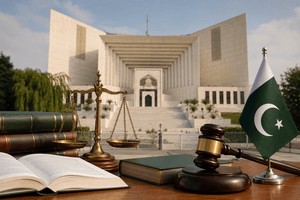
Islamabad – The debate on the establishment of new provinces in Pakistan has once again entered a crucial phase, where the Supreme Court Bar Association has supported the proposal, while the Pakistan Bar Council has stressed the need to take the matter forward through constitutional framework and broad national consultation.
President of the Supreme Court Bar Association, Haroon-ul-Rashid, while addressing a full court reference held in the Supreme Court in honour of Justice Musarrat Hilali, supported the proposal for the establishment of new provinces.
He said that the formation of more provinces could be helpful in bringing administrative powers closer to the people, balancing development opportunities and improving the governance system.
This issue came to the fore again when Interior Minister Mohsin Naqvi, during the Pakistan Economic Summit 2026, urged political parties to hold serious talks to resolve the important issues facing the country. The establishment of new provinces was also included in these issues.
On the other hand, the Pakistan Bar Council has taken a cautious but principled stance on the question of new provinces. According to the council, if there is a need for new provinces or administrative units in the country, then it is necessary to fully implement the procedure laid down in the constitution.
In its meeting, the PBC called on political parties to look at the issue in the national interest beyond political differences and start a comprehensive negotiation process.
The Bar Council says that a mere political declaration will not be enough on a sensitive issue like new provinces, but parliamentary action, constitutional requirements and national consensus must be given primary importance.
For this purpose, the Pakistan Bar Council has also approved organising a national seminar, in which leaders of political parties present in parliament and representatives of provincial bar councils will be invited. The seminar aims to develop a common perspective on important national issues, including new administrative units and better governance.
Administrative necessity is a key aspect in the discussion of new provinces. This question has been a part of political and public debate for many years in Pakistan due to issues related to population, geography and resource distribution. However, building a political consensus on this issue is still a major challenge.
The Supreme Court Bar also expressed its support for the 26th and 27th Constitutional Amendments. According to the SCBA President, these amendments can strengthen the concept of parliamentary supremacy, separation of powers and timely justice in the judicial system.
He also requested President Asif Ali Zardari not to further delay the approval of the appointments of judges recommended by the Judicial Commission of Pakistan to the High Courts.
The Bar President expressed confidence in the recent decisions of the Judicial Commission and said that the nominees for the High Courts were selected keeping in mind merit and competence.
Meanwhile, Justice Musarat Hilali’s judicial services were also appreciated in the full court reference. Chief Justice Yahya Afridi described her judicial journey as an example of determination, steadfastness and commitment to justice.
The Chief Justice said that Justice Musarat Hilali’s professional life created new possibilities for women in the legal field and her services are an example for future generations.
During the meeting, the Pakistan Bar Council also raised another important issue related to journalists. The council expressed concern over the National Cybercrime Investigation Agency’s issuance of notices and detention of some journalists in Islamabad.
The PBC called on the government to avoid such steps that could affect the constitutional guarantees related to freedom of expression and freedom of the press. According to the council, free media is fundamental to a democratic system and the rule of law.
The issue of new provinces is no longer limited to an administrative debate but also involves questions of constitutional process, political consensus, resource allocation and good governance. Recent activity by bar councils indicates that further consultation is needed at the national level on this issue.
However, any final progress will depend on consensus among political parties and constitutional procedures. National seminars and political consultations in the coming days can play an important role in giving practical direction to this debate.