

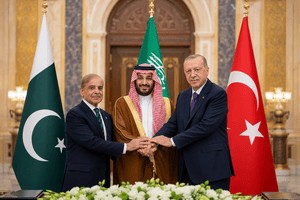
Mecca – Pakistan, Saudi Arabia and Turkey have signed a significant joint defence agreement amid growing security concerns in the region, which is being described as a major development in the changing defence strategy of the Middle East.
According to the prominent clause of this agreement signed in Mecca, an armed attack on any of the three countries will be considered an attack against all three. The aim of the agreement is to strengthen common security and further organise defence cooperation.
However, it would not be right to immediately see this agreement as the establishment of a new ‘Islamic NATO’. According to the details available, its main focus is to strengthen defence cooperation, joint readiness and security ties between the three countries, rather than establishing a permanent NATO-style military structure.
This development comes at a time when tensions in the Middle East, concerns over the security of maritime routes and the protection of energy infrastructure have increased. The current situation in the region has drawn the attention of the Gulf countries to the need to further diversify their defence partnerships.
Pakistan and Saudi Arabia already have a long-standing defence cooperation. The two countries also signed a strategic mutual defence agreement in 2025, which included the principle of considering aggression against one country as aggression against both. Turkey’s inclusion in the new trilateral agreement provides a broader framework for this cooperation.
The importance of the agreement for Pakistan is not limited to defence cooperation. Saudi Arabia is a major economic and energy partner for Pakistan, while the two countries also have long-standing military ties. The new arrangement could increase the possibilities of cooperation in defence training, joint exercises, information exchange and other areas.
Turkey’s inclusion adds a different dimension to the agreement. Ankara has built up significant capabilities in its defence industry, drone technology, naval platforms and other military sectors over the years. Therefore, the element of defence technology, along with military experience, could be important in cooperation between the three countries.
For Saudi Arabia, a key aspect of collective defence cooperation concerns the protection of its key energy facilities and trade routes. Regional stability is fundamental to the Saudi economy and the major projects underway under Vision 2030.
Despite the agreement, it would be premature to say that the balance of power in the region has changed immediately. The US military presence in the Gulf, modern defence systems and the military capabilities of other countries in the region remain important factors. Similarly, Iran’s missiles, drones and regional capabilities will also remain central elements in any new security order.
A key question regarding the agreement is its practical scope. The real significance of any defence agreement is not just its announcement but the extent to which member states institutionalise joint planning, intelligence cooperation, military exercises, and practical coordination in potential crises.
A common challenge for Pakistan, Saudi Arabia, and Turkey will also be how to keep defence cooperation separate from the perception of confrontation against a specific country. Reducing regional tensions and increasing their defence capabilities are simultaneously important goals for all three countries.
Overall, the Mecca Defence Agreement seems to be a sign of a gradual change in the security system of the region rather than an immediate revolution. It will allow the three countries to more systematically organise their mutual defence ties, while allowing Saudi Arabia to further diversify its security partnerships, Pakistan to strengthen its defence role at the Gulf level, and Turkey to expand its regional defence reach.
The real significance of the agreement will become clear in the coming months as the three countries further advance the mechanisms of practical cooperation, joint activities, and defence coordination under it. These actions will determine whether the Mecca Agreement remains a mere political declaration or becomes a permanent part of the region’s changing security architecture.