

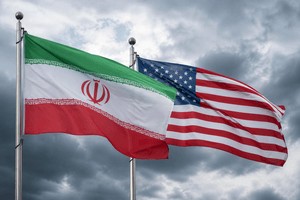
Tehran: The ongoing military tension between Iran and the United States appears to be entering a dangerous phase once again. Iran has claimed that it has launched missile and drone attacks on US military installations in the Gulf region, while the United States has also confirmed that it has continued airstrikes on various Iranian military targets for the sixth consecutive night.
According to the US Central Command (CENTCOM), the latest attacks targeted Iranian military centres in Qeshm Island, Bandar Abbas and its surroundings. US officials say the aim of the operation was to weaken Iran’s coastal defence capabilities, air defence systems, military logistics and naval operations.


On the other hand, the Iranian military has claimed that its retaliatory attacks targeted US military installations in Bahrain and Kuwait. Meanwhile, explosion-like sounds were heard in the Qatari capital Doha, while the Qatari Interior Ministry confirmed that a child was injured by shell fragments.
According to Iranian state media, the US airstrikes affected several bridges, railway stations and Iranshahr Airport in the southern Iranian city of Bandar Khamir. The state news agency IRNA said at least seven people were killed in the attacks on bridges in Bandar Khamir.
The effects of the growing tension between the two countries are also starting to be felt in the Strait of Hormuz. Ship traffic in the world’s most important oil and gas shipping route has been affected once again, which has increased uncertainty in the global energy market and fears of price increases.
According to reports, Iran has tightened its surveillance of the Strait of Hormuz, while the United States has increased its naval activities near Iranian ports. Sources say that Tehran has indicated that if the US attacks continue, pressure on the vital Bab al-Mandab waterway through Yemen’s Houthi group could also be increased.
White House spokeswoman Caroline Levitt has said that President Donald Trump will respond to any attempt to harm American interests in the Strait of Hormuz, but Washington still does not want to eliminate the possibility of a diplomatic solution.
Meanwhile, Iranian military spokesman Brigadier General Mohammad Akramian said that Iran has the full ability to maintain its control over the Strait of Hormuz and can defend this important sea passage from any part of its territory if necessary. He said that Iran wants commercial ships passing through the Strait of Hormuz to take a specific route near the Iranian coast.
On the other hand, US President Donald Trump has once again warned that if Tehran does not resume negotiations, Iran’s energy centres, bridges and other important infrastructure may face further attacks. According to analysts, the growing tension between the two countries could have a profound impact not only on the Middle East but also on global energy supplies, maritime trade and international financial markets.
We welcome your contributions to The Pakistan Observer. Submit your blogs, opinion pieces, press releases and news features to our editorial team.
Please send your submissions to our News Desk or Editorial team. We look forward to hearing from writers, journalists and contributors.