

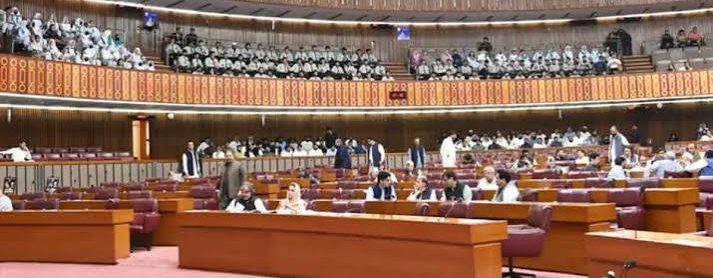
Islamabad – The National Assembly Secretariat spent over Rs35 million on legal services of private lawyers during the last four financial years. These expenses also relate to cases that were related to the Right to Information Act.
According to available government records, the highest payment was made in the financial year 2022-23. A total of Rs20.4 million was paid to eight lawyers this year. Later, payments of Rs 2.64 million were made in 2023-24, Rs 11.1 million in 2024-25 and Rs 1.61 million in 2025-26.
This information came to light on the request of journalist Sadia Mazhar. The Pakistan Information Commission had directed the National Assembly Secretariat to disclose the relevant records in Appeal No. 5626-04/2026. The same appeal of Sadia Mazhar against the National Assembly was also listed in the Commission’s hearing schedule for July 16, 2026.
According to the records, the National Assembly Secretariat had kept 10 special advocates on the panel for its cases since January 2022. They included Hafiz SA Rehman, Irfan Qadir, Ilyas Siddiqui, Arafat Ahmed Chaudhry, Imad Nasir Kundi, Lamia Niazi, Sanaullah, Ahsan Bhawn, Anwar Mughal and Farhad Ali Khan Durrani.
These payments also reveal a clear difference in the amount received by different lawyers. Ahsan Bhawan received Rs 9.9 million in 2024-25, which was the largest amount paid to a single lawyer during this period.
Irfan Qadir was paid a total of Rs 7.5 million, while Lamia Niazi was paid Rs 6.9 million in 2022-23. Ilyas Siddiqui received Rs 2.85 million.
Arafat Ahmed Chaudhry received payments in all four financial years. He was paid Rs 1.35 million in 2022-23, Rs 960,000 in 2023-24, Rs 1.2 million in 2024-25 and Rs 900,000 in 2025-26. This brings his total fee to Rs 4.41 million.
The matter mainly relates to RTI applications and legal proceedings arising out of them. In Pakistan, the legal right to obtain information from federal institutions exists under the Right of Access to Information Act 2017.
According to the record, after the action of the Pakistan Information Commission, the National Assembly Secretariat challenged some orders in the Islamabad High Court. The court remitted the matters to the commission for a final decision.
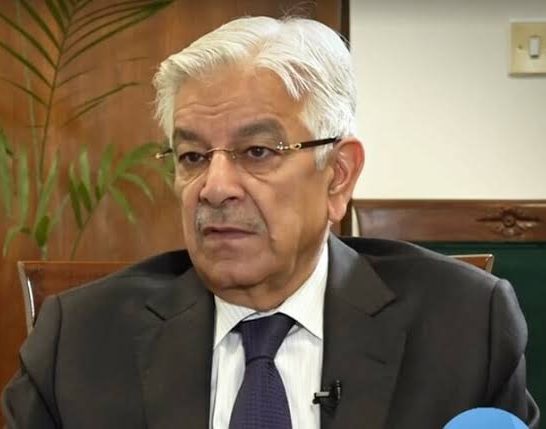
Zafar Sultan, Director General of the National Assembly’s Media Wing, confirmed the services of private lawyers and legal payments of about Rs 35 million. However, he maintained that these lawyers were appointed during the previous government and no new lawyers were hired during the current government.
According to the available records, the National Assembly Secretariat filed 12 cases in 2023. This was followed by one case each in 2024 and 2025. No such case was filed in 2022 and 2026.
These figures do not prove any illegal action. However, questions certainly arise about the policy of hiring private legal services from government funds. Especially when the federal government already has a government legal machinery.
The Attorney General of Pakistan is the chief legal officer of the federation. In addition, the federal government also has other legal officers and the legal structure of related government agencies. In such a situation, hiring the services of private lawyers by a government agency may be a legal necessity in some circumstances, but explaining its costs and justification remains important from the perspective of transparency.
The National Assembly itself is also the central body of parliamentary oversight and lawmaking. Therefore, the importance of public access to information in its own financial and administrative decisions increases further. Details related to various standing committees and administrative matters have been regularly released on the official website of the National Assembly in recent times.
The present case is also important in that the details of the expenses themselves came to light through the legal process of Right to Information. This shows that the system of access to information is not limited to ordinary federal institutions but can also be a means of raising questions on the administrative matters of parliamentary institutions.
The real focus should now be not just on the total expenditure of Rs 35 million but on why the need for private legal representation arose, how the lawyers were selected and on what basis their fees were decided.
Timely publication of such details under the principle of transparency can reduce unnecessary disputes in the future. It will also strengthen public confidence in the financial decisions of parliamentary bodies.
We welcome your contributions to The Pakistan Observer. Submit your blogs, opinion pieces, press releases and news features to our editorial team.
Please send your submissions to our News Desk or Editorial team. We look forward to hearing from writers, journalists and contributors.