

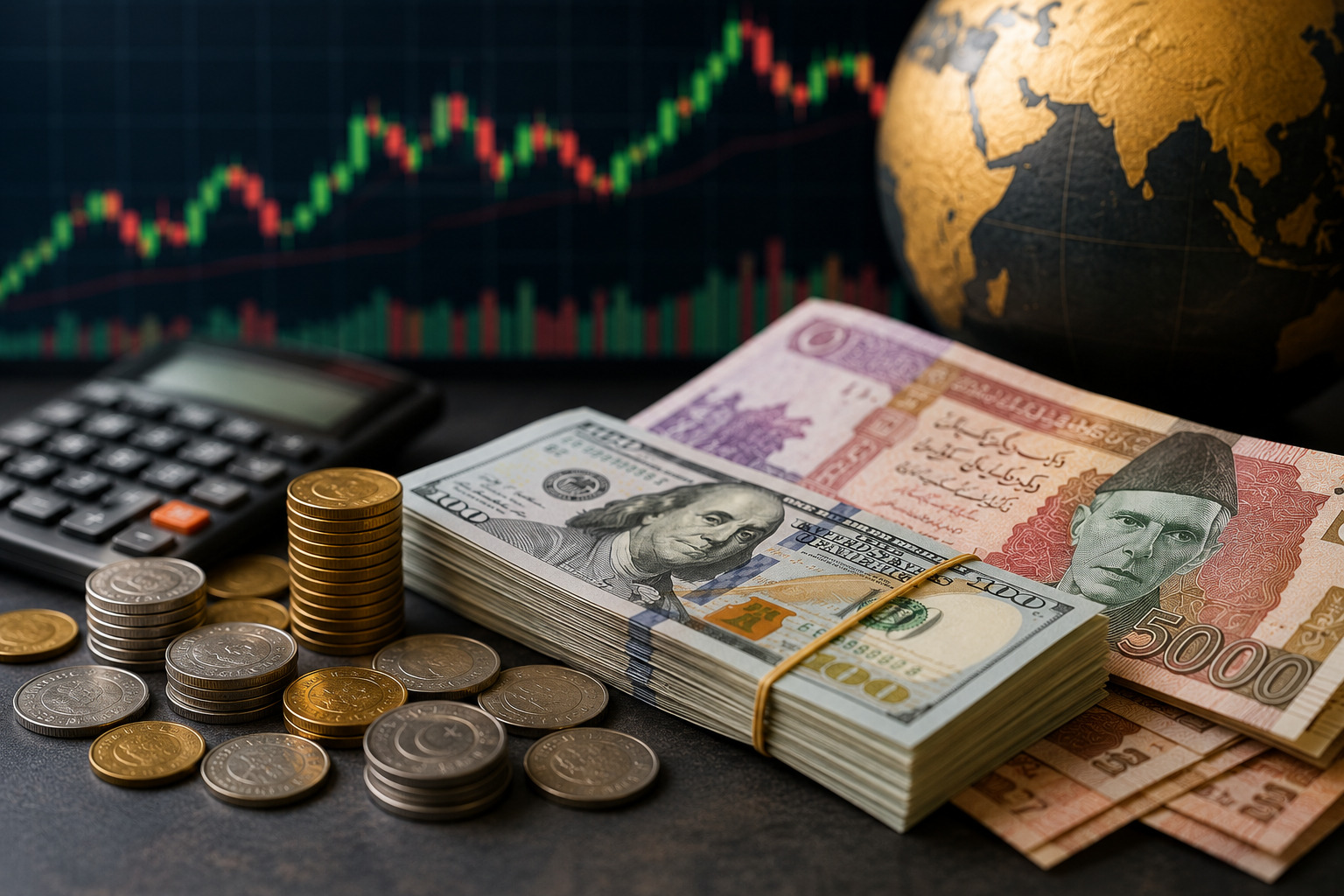
Karachi – Pakistan’s interbank foreign exchange market remained relatively stable in its latest trading session, with the Pakistani rupee maintaining its position against most major international currencies.
The US dollar was recorded at Rs 278.25 for buying and Rs 278.75 for selling, according to the latest available interbank closing rates. Market analysts noted that the rupee’s stability reflected continued monitoring of foreign exchange inflows, remittances and developments in the country’s external sector.

The British pound remained among the most valued currencies in the market, closing at Rs 372.27 for buying and Rs 372.94 for selling, while the euro closed at Rs 321.99 and Rs 322.57, respectively.
Meanwhile, regional currencies also performed steadily. The UAE dirham closed at Rs 75.77 for buying and Rs 75.91 for selling, while the Saudi riyal closed at Rs 74.13 and Rs 74.26, respectively.
Other major currencies also remained largely stable. The Canadian dollar was recorded at Rs 199.14 for buying and Rs 199.50 for selling, while the Australian dollar closed at Rs 195.89 and Rs 196.24. The Singapore dollar was fixed at Rs 216.65 for buying and Rs 217.04 for selling.
The Swiss franc was one of the strongest currencies against the Pakistani rupee, ending the session at Rs 349.71 for buying and Rs 350.33 for selling. Meanwhile, the Chinese yuan closed at Rs 41.14 and Rs 41.21, reflecting robust trade-related demand.
Financial experts said that exchange rate movements are playing a significant role in Pakistan’s trade dynamics, import costs and external debt obligations. They added that maintaining currency stability is important for investor confidence, business planning and overall economic management.
Analysts added that foreign exchange reserves, remittance inflows, global commodity prices, and international financial market trends were the main factors affecting currency values.
Since Saturday was a non-trading day for the interbank market, the latest available rates reflect the closing levels of the previous trading session. Market participants were expected to closely monitor global economic developments, commodity prices, and central bank policy decisions that could affect currency movements when trading resumes next week.
The latest interbank closing rates show that the Pakistani rupee has maintained a relatively stable position against major international currencies, providing a sense of predictability for businesses, investors, and consumers.
| Flag | Code | Bank Buying | Bank Selling |
|---|---|---|---|
 |
USD | 278.25 | 278.75 |
 |
GBP | 372.27 | 372.94 |
 |
EUR | 321.99 | 322.57 |
 |
AED | 75.77 | 75.91 |
 |
SAR | 74.13 | 74.26 |
 |
CAD | 199.14 | 199.5 |
 |
AUD | 195.89 | 196.24 |
 |
CNY | 41.14 | 41.21 |
 |
HKD | 35.51 | 35.57 |
 |
JPY | 1.73 | 1.74 |
 |
SGD | 216.65 | 217.04 |
 |
SEK | 29.45 | 29.5 |
 |
CHF | 349.71 | 350.33 |
 |
THB | 8.48 | 8.5 |
 |
DKK | 42.99 | 43.16 |
We welcome your contributions to The Pakistan Observer. Submit your blogs, opinion pieces, press releases and news features to our editorial team.
Please send your submissions to our News Desk or Editorial team. We look forward to hearing from writers, journalists and contributors.