


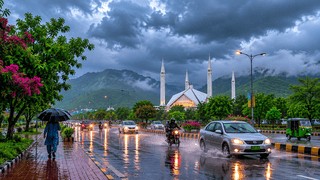
ISLAMABAD: With the onset of the second phase of monsoon in the country, the National Disaster Management Authority (NDMA) has directed the relevant agencies and provincial administrations to remain on high alert in view of possible weather hazards during the next few days. The agency said that the expected rainfall from July 6 to 10 may be more intense than usual in many areas, which has raised the possibility of sudden rise in water levels in mountain streams and rivers.
According to the official alert, this time along with monsoon winds, an active westerly wind system will also affect the northern and northeastern parts of the country. According to weather experts, such a weather combination is likely to record heavy rainfall in some places in a short time, which may lead to local flooding.


The NDMA has warned that a significant increase in water flow is expected in various river systems of Gilgit-Baltistan, especially the Indus, Yasin, Ghizer, Kelek, Mintaka and Daril. Landslides and temporary closure of highways in mountainous areas cannot be ignored.
Upper and central districts of Khyber Pakhtunkhwa are also likely to be more affected by this weather system. Water levels are predicted to rise in Lothko, Daral, Palas, Siran, Gomal and other rain-fed rivers, due to which the district administration has been instructed to keep a special eye on low-lying areas.
The alert also mentions the Neelum, Poonch, Jhelum rivers and their associated rain-fed rivers in Azad Jammu and Kashmir, where the flow of water may accelerate in case of heavy rains.
Regarding Punjab, the NDMA has warned that some rain-fed rivers in Sialkot, Narowal and Dera Ghazi Khan may cause local flooding, while water is also likely to accumulate on roads if the drainage system in urban areas is affected.
Meanwhile, PDMA Punjab has issued separate rainfall forecasts for most districts of the province, saying that light and heavy rainfall is expected in Lahore, Rawalpindi, Murree, Gujarat, Gujranwala, Faisalabad, Sargodha, Sialkot, Narowal, Jhang, Multan, Bahawalpur, Rahim Yar Khan and several districts of South Punjab till July 8.
According to the organization, instructions have been issued to all district administrations, rescue services and related departments to be ready to deal with possible emergencies so that timely relief operations can be made possible in any unusual situation.
Meteorologists say that in recent years, due to climate change, a significant change has been seen in the intensity and pattern of monsoon rains. Unusual rainfall in a short period of time can increase the risks like urban flooding, landslides and flash floods in mountainous areas, due to which the importance of a timely early warning system has increased more than ever.
The NDMA has appealed to the public to avoid unnecessary travel during the rains, stay away from mountain streams and river banks, while ensuring implementation of the instructions issued by the local administration and the Meteorological Department.
According to government officials, the situation is being continuously monitored, and if the intensity of the rains increases, the relevant agencies will also issue further safety measures and fresh alerts.