

Pakistan was established with the hope that its citizens would be able to live freely, practice their religions and beliefs, and pursue economic prosperity with dignity. Yet, after nearly 79 years, that promise remains unfulfilled for millions. Since the demise of Quaid-e-Azam Muhammad Ali Jinnah, no political leadership has been able to steer the country permanently out of the cycle of political instability, economic crisis, and institutional weakness.
The fundamental problem is not a lack of resources alone. It is the continued dominance of an elite system in which political influence, bureaucracy, feudal power, institutional privilege, and economic wealth reinforce one another. The result is a widening distance between those who make policies and those who must live with their consequences.
On one side, governments continue to provide various privileges and facilities to parliamentarians, senior bureaucrats, powerful institutions, judges, influential landlords, and other sections of the elite. On the other, ordinary citizens face heavy taxation, rising living costs, and shrinking economic opportunities. Pakistan’s poverty figures tell a painful story. The World Bank estimates that around 23 percent of the population was living below the $3-a-day international poverty line in 2024, while its broader assessment estimated poverty at 25.3 percent in 2023/24 under Pakistan’s national methodology.
The injustice becomes more visible when we compare the lives of the privileged with those who survive on modest salaries. Some people enjoy official facilities, subsidized services, official transport, and other benefits, while hardworking employees struggle to pay electricity, gas, education, and medical bills. Many ordinary families have been forced to borrow simply to maintain a basic standard of living. Those who work the hardest often receive the least security.
This inequality is not merely an impression. UNDP’s National Human Development Report on inequality estimated that elite privileges in Pakistan amounted to Rs 2.66 trillion, equivalent to about 8 percent of GDP. The report identified power, people, and policy as major drivers of inequality.
Meanwhile, the tax burden continues to reach deeply into ordinary economic activity. The Federal Board of Revenue is under pressure to increase revenue, and tax collection is certainly necessary for a functioning state. But taxation becomes unjust when citizens feel that those with influence can protect their wealth while salaried people, small traders, and consumers have little ability to escape the tax net. FBR data show the scale of the collection effort: revenue reached Rs 1,015 billion in January 2026 alone. The real question, however, should be whether the burden is being distributed fairly.
Employment is another serious concern. For young Pakistanis, a degree no longer guarantees a job. The World Bank reports that 37 percent of Pakistanis aged 15–24 were not in employment, education, or training in the available assessment. The youth unemployment rate was estimated at 9.6 percent in 2025. Behind these statistics are millions of young people waiting for an opportunity to prove themselves.
Meritocracy has also suffered. When employment and opportunities depend on references, influence, or connections rather than ability, talented young people lose hope. This institutional weakness then becomes an argument for privatization. Instead of first reforming government institutions, improving accountability, enforcing merit, and removing political interference, governments increasingly find privatization an easier solution. The question must be asked: should public institutions be abandoned because they were poorly managed, or should they first be made efficient and accountable?
The same question applies to the energy sector. The enormous costs associated with power-sector inefficiencies and past contractual arrangements, including payments to independent power producers (IPPs), demonstrate the consequences of weak policymaking and inadequate long-term planning. Ordinary consumers ultimately bear much of the burden through electricity prices and taxes.
The most painful consequence of this economic despair is migration. Parents increasingly want their children to leave Pakistan because they see limited opportunities at home. Some young people risk their lives through irregular migration routes, using dinghy boats to reach Europe and undertaking dangerous sea crossings because desperation has overcome fear. A country that cannot provide hope to its young people risks losing not merely workers but its future.
Pakistan’s policymakers cannot continue to explain every hardship through IMF pressure, global conditions, or inherited problems. External constraints are real, but governance choices are real, too. A poor citizen cannot be asked indefinitely to sacrifice while those with privilege remain protected.
Pakistan does not need another promise. It needs a new social and economic contract based on merit, equal taxation, institutional accountability, productive employment, and protection for the vulnerable. Privileges extended to certain classes should be reviewed. Public institutions should be reformed before being sold. Tax policy should bring the powerful into the net rather than repeatedly squeezing those who are already compliant.
The people of Pakistan have waited long enough. They do not ask for special treatment. They ask for what every citizen deserves: dignity, opportunity, justice, and a fair chance to live a decent life in the country their forefathers helped create. The time has come for Pakistan’s policymakers to stop asking ordinary citizens to bear the cost of every crisis and start making the privileged share the burden as well.
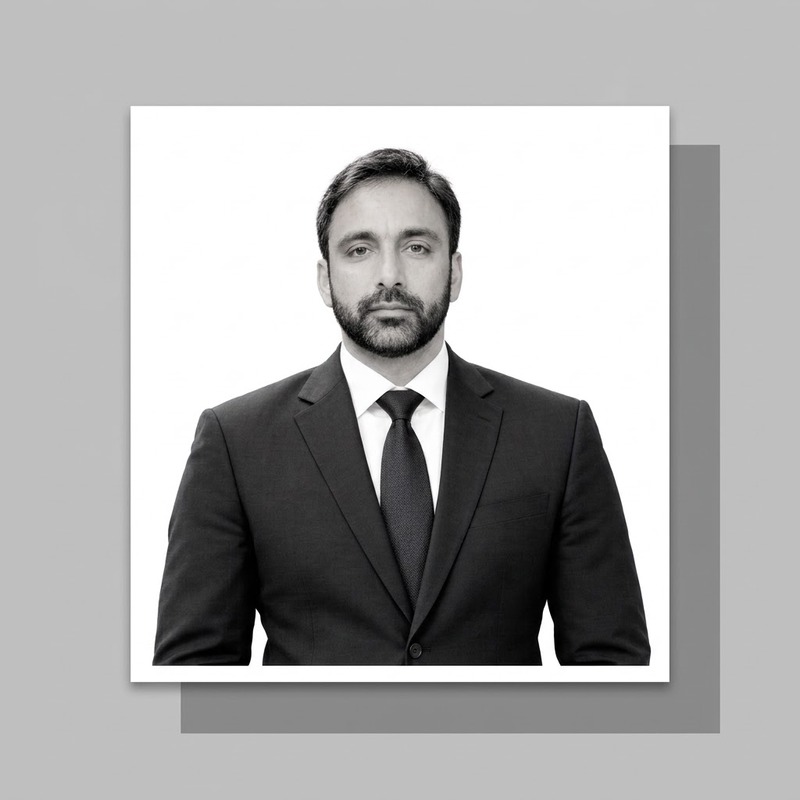
The writer can be reached at mujtabanodeel@gmail.com.
We welcome your contributions to The Pakistan Observer. Submit your blogs, opinion pieces, press releases and news features to our editorial team.
Please send your submissions to our News Desk or Editorial team. We look forward to hearing from writers, journalists and contributors.