

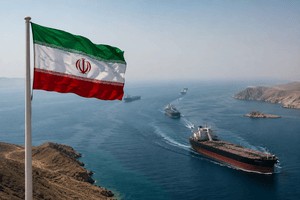
Tehran – The ongoing dispute between Iran and the US has once again increased tensions in the Gulf. Iran has warned Gulf countries that providing any kind of support to the US military will be considered part of the US operation.
The statement by the Chief of Staff of the Iranian Armed Forces, Ali Abdullahi, came as the United Arab Emirates announced the suspension of trade and financial transactions with Iran. Abu Dhabi made this decision following the escalating tensions in the region.

According to the UAE, all trade activities, business exchanges and financial transactions with Iran have been suspended until further notice. The decision is of particular importance in the context of the important trade relations between the two countries.
Abu Dhabi says that the recent tensions have affected regional and global peace. Iran, however, has rejected allegations of a missile attack by the UAE.
In this situation, the Strait of Hormuz has become the most important issue. The route is crucial for global energy supplies. The recent dispute has disrupted shipping and oil shipments.
The United States is also trying to increase economic pressure on Iran. President Donald Trump has threatened countries that support Iran with serious economic consequences. Washington aims to further restrict Tehran’s trade and financial resources.
The UAE’s decision is seen as crucial in this policy. Dubai has long been an important hub for trade and financial activities for Iran. Therefore, stopping trade could put additional pressure on Iranian businesses and imports.
However, the effects of this situation will not be limited to Iran alone. Prolonged tensions in the Gulf could increase shipping costs. Global oil prices could also come under pressure.
Many Asian countries, including Pakistan, import energy from the Gulf. Therefore, continued disruption in the Strait of Hormuz could affect the global economy as well as the Pakistani economy.
The biggest question in the current situation is whether tensions will escalate further or the parties will return to negotiations. In recent days, there have been prospects for talks on the Strait of Hormuz, but diplomatic progress is still unclear.
The situation is also difficult for countries in the region. On the one hand, they have to ensure their own security while, on the other, keeping themselves aloof from the growing conflict between the United States and Iran.
Overall, the latest developments suggest that the Iran-US conflict is no longer just a military issue. Its effects have reached trade, energy, shipping and regional diplomacy. Diplomatic contact now seems more important than ever to reduce tensions.