

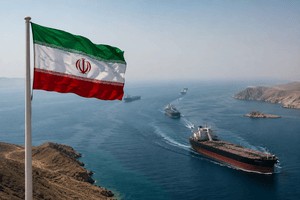
Tehran – Iran has strongly criticized Washington’s policy on Iran and the Middle East during the ongoing tension with the United States. Iranian Foreign Ministry Spokesperson Esmail Baghai described the US policy as far from the facts and said that Washington is relying too much on its own narrative.
Esmail Baghai also referred to Russian writer Fyodor Dostoevsky’s novel “The Brothers Karamazov”. He criticized the US style of governance and foreign policy through an idea contained in the novel.
According to Baghai, continuous misrepresentation can lead a person to a stage where he loses the difference between truth and deception. The Iranian spokesperson applied the same concept to the US policy on Iran and the region.
Iran’s Deputy Foreign Minister Kazem Gharibadi has also reacted to US President Donald Trump’s recent statement. Trump had said that the US could declare the Strait of Hormuz as American territory.
Gharibadi rejected this claim, saying that the status of the Strait of Hormuz cannot be changed by any order, military force or political statement. According to him, the decision to open or close the strait is in Iran’s hands.
The Iranian Deputy Foreign Minister made it clear that Tehran will not back down from US threats. His statement came at a time when tensions between the two countries have affected global energy and maritime trade.
The Strait of Hormuz is a key shipping route between the Persian Gulf and the Gulf of Oman. It is of utmost importance for global energy supply.
According to Reuters, about a fifth of the world’s seaborne oil trade used to pass through this route in the past. Due to the current tensions, maritime traffic here has almost come to a standstill.
The situation has also increased risks for global energy markets. A prolonged blockage in the strait could put pressure on oil supplies, shipping costs and fuel prices.
The Strait of Hormuz has become a key source of pressure during the tensions between Iran and the US. Washington is increasing pressure on Tehran, while Iran is linking the issue of the strait to its security and regional position.
According to Iranian officials, the end of the US naval blockade is necessary to normalize the Strait of Hormuz. Tehran has previously said that the strait cannot be made a completely safe shipping route as long as the US blockade continues.
On the other hand, according to the US position, Iran must restore maritime traffic in the Strait of Hormuz. The strong statements from both sides show that fundamental differences still remain.
The continued blockage in the Strait of Hormuz is not limited to Iran and the US. Its effects could reach the global energy market.
Rising oil prices could increase the costs of importing countries. This situation is of particular importance for energy-importing economies, including Pakistan.
However, diplomatic developments can also play an important role in the current situation. There have been reports of talks between Iran and Oman on safe shipping. According to the Iranian position, the opening of the strait is related to the lifting of the US naval blockade.
Overall, it is clear from Tehran’s latest statements that Iran wants to maintain the Strait of Hormuz as its main strategic pressure. On the other hand, Washington’s tough policy has further complicated the dispute.
In the coming days, the situation in the Strait of Hormuz will be a major test for the global oil market, maritime trade, and US-Iran diplomatic relations.