
Pakistan has spent years trying to stabilise its economy through higher taxes, expensive energy, borrowing, expenditure controls and repeated promises of structural reform. Yet a fundamental question remains unanswered: can Pakistan achieve lasting economic recovery if the cost of adjustment continues to fall disproportionately on ordinary citizens while privileges, exemptions and inefficient economic arrangements remain insufficiently challenged?
This is not an argument against the wealthy, politicians, parliamentarians, judges, bureaucrats or any institution. Wealth creation and strong institutions are essential for a growing economy.


The real question is whether the economic system provides a genuinely level playing field and whether public resources are being allocated according to economic need, productivity and national interest.
Economic reform should not simply mean asking citizens to pay more. It should mean making the entire economic structure more efficient, competitive and fair.
Whenever Pakistan faces fiscal pressure, the familiar solutions appear: increase revenues, adjust electricity and fuel prices, broaden taxation, reduce subsidies and control expenditure. Some of these measures may be necessary for macroeconomic stability.
Pakistan’s current IMF programme itself emphasises fiscal sustainability, broadening the tax base, energy-sector viability, competition, productivity and structural reform.
But there is another side of the equation. What expenditure can be reduced? What exemptions can be removed? What privileges can be rationalised? Which inefficient institutions can be restructured? Which economic distortions protect powerful interests at the expense of consumers and taxpayers?
These questions deserve the same seriousness as increasing taxes.
A sustainable economy cannot be built indefinitely by extracting more from those who already have limited capacity to contribute.
Occasional reductions in fuel prices or targeted relief for motorcyclists may provide temporary assistance, but such measures cannot substitute for economic reform.
A worker who uses a motorcycle to reach work may welcome a small reduction in fuel costs. Yet if his electricity bill, food expenditure, rent, children’s education and healthcare costs continue rising, the fundamental pressure on his household remains.
Relief reduces today’s pain; reform reduces tomorrow’s burden.
People have therefore become increasingly sceptical of repeated announcements because they can distinguish between temporary concessions and permanent solutions.
The objective should be to reduce the underlying cost of living rather than merely announcing periodic relief packages.
Electricity provides perhaps the clearest example. High electricity costs affect households, factories, agriculture, shops and virtually every productive activity.
Expensive energy increases the cost of production, reduces competitiveness, discourages investment and ultimately contributes to inflation.
Pakistan’s power-sector problem is complex. It involves generation costs, transmission and distribution losses, theft, circular debt, financing costs, contracts and capacity arrangements.
It would therefore be simplistic to blame one group or one type of contract for the entire crisis. Nevertheless, the issue of IPPs and capacity payments cannot simply disappear from the national economic debate.
The real question is how quickly and transparently Pakistan can move towards an electricity system in which consumers pay for an efficient system rather than continuously carrying the cost of accumulated inefficiencies.
Every rupee unnecessarily added to the cost of electricity ultimately becomes a tax on economic activity.
Pakistan should also conduct a comprehensive economic review of concessions, exemptions, subsidies and preferential arrangements across the economy.
This should not target one profession or institution. It should cover public officials, parliamentarians, public institutions, state-owned enterprises, powerful commercial interests, tax exemptions, special concessions and every other category receiving significant economic advantages from public resources.
The question should be simple: is this benefit economically justified, transparently administered and producing sufficient public value?
If the answer is yes, it should be defensible. If the answer is no, it should be reconsidered, regardless of who receives it.
Parliamentarians perform an essential democratic function. Judges perform a constitutional function. Civil servants administer the state. The security establishment performs important national responsibilities.
None of these roles should be undermined. But institutional importance cannot mean permanent exemption from economic scrutiny.
There is also a practical reason why the privileges attached to powerful positions deserve serious review.
If unnecessary privileges and preferential benefits are withdrawn from those at the helm of affairs, they will themselves experience some of the financial pressures confronting ordinary citizens. This could create a stronger incentive for policymakers to address the underlying causes of inflation, expensive energy, fiscal waste and economic inefficiency rather than repeatedly offering temporary relief.
This should not be understood as a call to impose hardship on public officials.
Legitimate salaries, security and institutional facilities are necessary. The point is that when decision-makers share a reasonable and proportionate exposure to the economic realities faced by the wider population, economic problems are less likely to remain someone else’s problem.
The experience of Britain and European countries offers a useful institutional principle. They have not eliminated inequality or every form of privilege, but public-office benefits are generally governed through formal rules, transparency and oversight.
In the United Kingdom, for example, MPs’ salaries and expenses are subject to established rules and independent administration, while financial interests and standards of conduct are publicly regulated.
Pakistan does not need to copy another country’s system mechanically. It needs to establish the same basic principle: public benefits must have justification, transparency and accountability.
Economic equality does not mean making everyone equally wealthy. It means creating a system in which success depends increasingly on productivity, investment, innovation and merit, not preferential access to the state.
Pakistan needs a broader and fairer tax base, elimination of unjustified exemptions, transparent review of public expenditure and privileges, genuine power-sector reform, greater transparency around IPP and capacity arrangements, reduction of distribution losses, restructuring of inefficient state-owned enterprises, stronger competition and targeted protection for genuinely vulnerable households.
The government should not ask only, “How much more can we collect from the people?”
It should also ask, “How much unnecessary cost can we remove from the system?”
That is the real test of economic leadership.
The wealthy have every right to prosper. Businesses have every right to earn profits. Public officials have every right to legitimate compensation. Institutions have legitimate needs.
But no economic advantage funded, protected or facilitated by the state should be beyond reasonable scrutiny.
Pakistan’s economic recovery will become sustainable only when reform reaches every level of the economy, not merely the household electricity bill, petrol pump and tax return of the ordinary citizen.
The poor should not always be told to sacrifice. The middle class should not always be treated as the easiest taxpayer. And the powerful should not be asked only to support reform in principle.
They should also be willing to accept reform in practice.
When the people who make economic decisions are also required to live under a fairer and more disciplined system, the pressure to solve the country’s economic problems becomes real rather than rhetorical.
That is how economic confidence is built, public trust is restored and Pakistan can move from a cycle of temporary relief and repeated crisis towards a genuinely productive, competitive and sustainable economy.
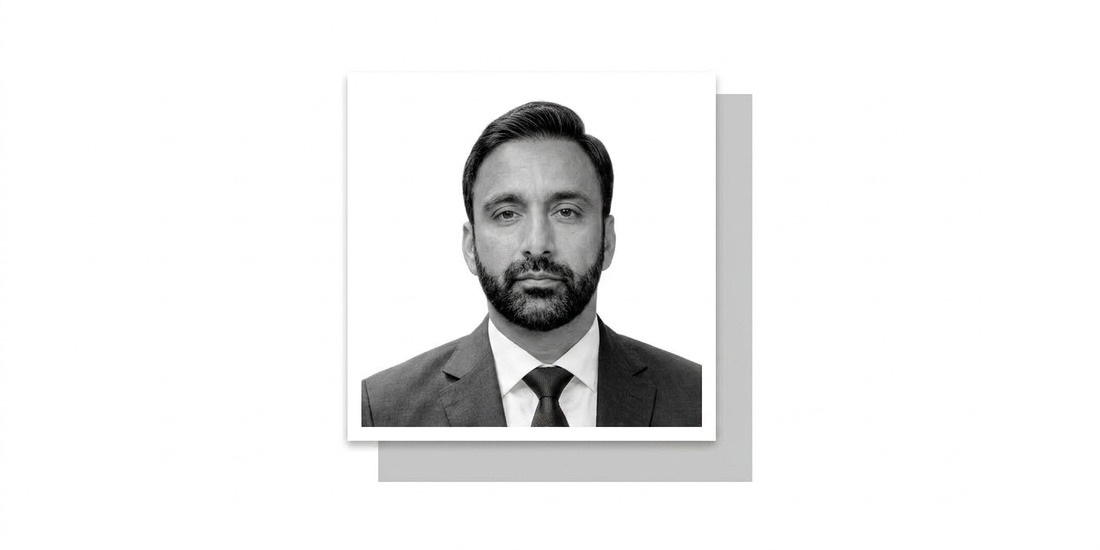
Mr Ghulam Mujtaba is a freelance writer and commentator with an interest in Pakistan’s economic, social and public policy issues. His writings examine governance, economic inequality, institutional reform and challenges facing ordinary citizens.
We welcome your contributions to The Pakistan Observer. Submit your blogs, opinion pieces, press releases and news features to our editorial team.
Please send your submissions to our News Desk or Editorial team. We look forward to hearing from writers, journalists and contributors.