

Islamabad – The federal government has introduced a mobile app for the Fixed Tax Asan Scheme for small traders and shopkeepers. The move aims to simplify the process of filing tax returns and include more business people in the tax system.
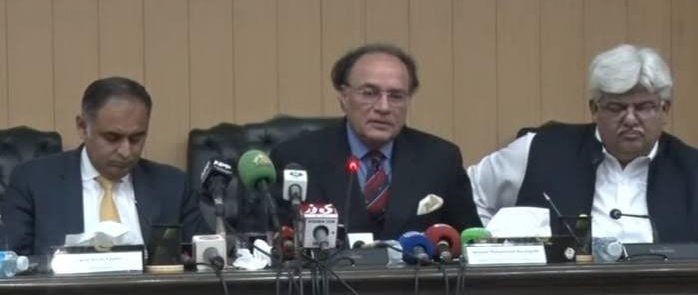
Minister of State for Finance Bilal Azhar Kayani launched the app on Wednesday along with Finance Minister Muhammad Aurangzeb and business representatives. He said that the government has continuously consulted the business community in preparing the app.
The new scheme is for traders whose annual sales are up to Rs 200 million. Existing tax filers can also benefit from this facility by fulfilling certain conditions.
The app has a simple form in Urdu language. Traders will be able to obtain PSID during registration. It will also be possible to pay taxes through it.
After the payment is completed, the trader will be informed about his/her participation in the scheme and filer status. He/she will also be informed about the facilities available.
The government has also kept the tax calculation relatively simple. One percent tax will be levied on the annual sales declared under the scheme. The amount of withholding tax will be adjustable, however, the minimum tax will be Rs 25,000.
An important condition has also been imposed on existing filers. Their sales in any year in the last three years should not exceed Rs 200 million. Their minimum tax will not be less than the amount due in the previous year.
Traders included in this scheme will not be required to install a point of sale machine at the shop. They will also not be restricted from becoming withholding agents.
A digital plate will also be provided to registered shopkeepers. According to the government, the purpose of this plate under the relevant tax rules is to protect the shopkeeper from unnecessary tax interference.
A physical plate can also be obtained from the concerned office. The government has said that the plate will be provided free of cost to traders who register within the stipulated period. Later, its price may go up to around Rs 1,500.
The app is currently available in Urdu. The government has announced to provide the facility in other languages including Pashto, Balochi and Sindhi by the first week of September.
The app is also expected to be available on the Apple Store in the coming days. The FBR already provides the Tax Asan mobile app for taxpayers.
The government has also decided to guide traders through focal officers of regional tax offices in each district. Chambers of Commerce have also been invited to play a supporting role in this process.
According to Finance Minister Muhammad Aurangzeb, small business owners need a tax system that is simple and workable. According to him, the government has kept this need in mind in the new scheme.
The main objective of the government is not only to increase tax collection but also to make undocumented businesses a part of the formal economy. The parliamentary committee has already been told that the goal of the new retailer tax scheme is to broaden the tax base.
This effort is important because the retail sector in Pakistan has long been largely outside the ambit of tax documents. Various schemes have been introduced in the past to bring traders into the tax net, but they have not yielded the desired results.
In the new scheme, the government has taken a different approach from past experiences. Relatively simple rates, minimum tax, digital registration and some administrative facilities are an attempt to reduce the resistance of traders.
However, the success of this system will depend on accurate business data. If traders understate sales, it may be difficult for the government to collect the expected additional revenue. Concerns about possible misuse of the scheme and under-reporting have also been raised in parliamentary forums.
Therefore, effective monitoring and transparent data systems are also necessary along with the mobile app. If the government is successful in maintaining convenience and trust, this initiative can help connect small businesses to the formal economy.
We welcome your contributions to The Pakistan Observer. Submit your blogs, opinion pieces, press releases and news features to our editorial team.
Please send your submissions to our News Desk or Editorial team. We look forward to hearing from writers, journalists and contributors.