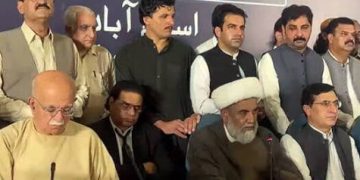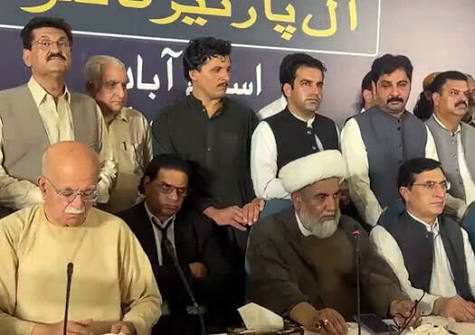
Islamabad – The Pakistan Tehreek-e-Insaf (PTI) has decided to expand the scope of consultations with political parties on the issue of establishment of new provinces, while preparations are also being made to convene a meeting of the alliance’s parliamentary party.
According to sources, the upcoming strategy regarding new provinces will be considered in the parliamentary party meeting. The meeting will also review the overall political situation of the country and the possible stance of the opposition on this issue.

Sources say that the head of the opposition alliance, Mahmood Khan Achakzai, is also expected to meet with the head of the Jamiat Ulema-e-Islam, Maulana Fazlur Rehman. In addition to the political situation in the country, the issue of new provinces is also likely to be discussed between the two leaders.
In this regard, the alliance has also decided to contact the leadership of other political parties. According to sources, meetings are expected with Jamaat-e-Islami Ameer Hafiz Naeem-ur-Rehman, Awami National Party leader Aimal Wali Khan, former Prime Minister Shahid Khaqan Abbasi and Qaumi Watan Party chief Aftab Ahmed Khan Sherpao.
According to sources, the purpose of these contacts is to get an understanding of the positions of different political parties and to discuss a possible joint strategy for the future.
The proposal of the Pakistan Tehreek-e-Tahafuz Ain Pakistan to convene an all-party conference is also under consideration. According to sources, other political parties will be invited to participate in this conference so that broader political consultations can be held on the issue of new provinces.
The proposed conference will consider the possibilities of building consensus among political parties and a common course of action. However, no official announcement has been made regarding the meetings and the final schedule of the conference.
The issue of new provinces is an important constitutional and political issue in the country, on which different parties have been expressing their positions from time to time. The current consultation is focusing on forming a common position on this issue among the opposition parties.