ISLAMABAD: Political debate intensified in the National Assembly session on Wednesday over the situation in Azad Jammu and Kashmir (AJK) and the ongoing protests in Rawalakot and some statements by the federal government, where leaders of the Pakistan Peoples Party (PPP) and the Jamiat Ulema-e-Islam (JUI-F) stressed political dialogue and understanding to resolve the issues.
The debate began when senior PPP leader and former Prime Minister Raja Pervaiz Ashraf raised objections to the recent statement of defence minister Khawaja Asif. He said that personalities holding responsible positions on sensitive national issues should speak with utmost caution, as such statements can affect public sentiments.

Raja Pervaiz Ashraf said that Azad Kashmir is a sensitive region, and it is necessary to take into account the opinions and feelings of the people there. He said that in the current situation, instead of provocative statements, patience and wisdom are needed to resolve the issues.
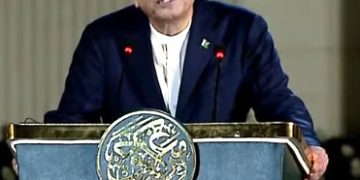
Later, PPP Chairman Bilawal Bhutto Zardari also expressed his views on the issue and said that Prime Minister Shehbaz Sharif is positively engaging with political parties and allies to get the country out of the difficulties it is facing; however, some statements may affect the government’s efforts.
Bilawal Bhutto Zardari said that the issues of Azad Kashmir should be resolved politically and all parties should try to reach a consensus through talks. He stressed that it is important to take the issues of the Kashmiri people seriously so that lasting stability can be maintained in the region.
The PPP chairman said that it is the responsibility of the government and the allied parties to reduce political tensions and take steps that promote confidence building. He also said that the Prime Minister should have full authority over the policy direction of his team so that the government’s stance remains consistent.
During the meeting, Jamiat Ulema-e-Islam (F) chief Maulana Fazlur Rehman also discussed the issue of Azad Kashmir. He said that the Joint Public Action Committee (JPAC) has written to him for mediation, and he has expressed his willingness to accept this role.
Maulana Fazlur Rehman said that political disputes can only be resolved through political means, and the government, as a responsible state institution, should take the concerns of the people seriously. He stressed that meaningful negotiations between all concerned parties are necessary to reduce tensions.
Prime Minister Shehbaz Sharif, while speaking in the House, also mentioned his relationship with Maulana Fazlur Rehman and said that despite political differences, communication and dialogue should continue. A short conversation was held between the two leaders in the House in a cordial manner, which the members listened to with interest.
On the other hand, Advisor to the Prime Minister on Political Affairs Rana Sanaullah said that some issues of Azad Kashmir should be resolved in political and constitutional forums. He said that there are some demands on which only the relevant elected bodies can decide.
He appealed to the protest leadership to take the path of dialogue and continue discussions with the government on their demands. According to him, a lasting solution to the problem is possible only through a political process.
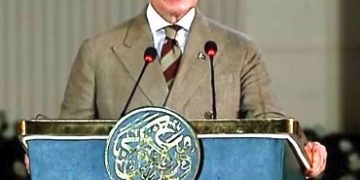
Addressing the opposition in the meeting, Defence Minister Khawaja Asif stressed the need to review past political attitudes and strengthen democratic traditions. He once again highlighted the importance of reconciliation among political parties and the promotion of democratic values.
According to political observers, the debate in the National Assembly has made it clear that the situation in Azad Kashmir will remain an important topic of national politics in the coming days. Although different political parties differ on some issues, most leaders agreed that the solution to the problem lies in dialogue, political inclusion and restoration of public trust.