


A brass plaque can do a surprising amount of bureaucratic work. Put “Counselling Centre” on a door, appoint someone called a counsellor and arrange a seminar on stress. The university can now report that it provides mental-health support.
The plaque cannot tell a distressed student what lies behind the door: how long an appointment will take, whether the conversation will remain private, who will respond after hours, or where the student will be sent if the case requires specialist care. That is the difference between having a room and having a system.
The distinction has acquired fresh urgency. On October 1, Pakistan launched its National Mental Health Policy 2026–2035. Figures presented at the launch suggest that 32.4 million people require mental-health care, while only about five per cent of the population has access to such services. Pakistan also has roughly 0.19 psychiatrists for every 100,000 people.
With a shortage on that scale, care cannot begin and end in hospitals. Schools, universities, workplaces and community institutions must become dependable routes into it.
Universities deserve particular attention because distress often surfaces there at the very moment young people are expected to manage academic pressure, financial uncertainty, family expectations and the difficult passage into adult life.
A recent systematic review and meta-analysis brought together 35 studies involving 11,209 university students in Pakistan and produced a pooled estimate of 51 per cent for depressive symptoms. The number cannot bear more weight than the studies allow. Much of the research concerned medical and urban student populations, and screening questionnaires do not amount to clinical diagnoses.
Even so, the finding is difficult to wave away. It points to serious distress among the students studied—and to the need for better national evidence.
The Higher Education Commission (HEC) is not starting from zero. Standard 10 of its institutional quality-assurance framework requires universities to safeguard students’ physical and mental health and lists psychological counselling among the basic services they should provide.
It also calls for readily accessible student support, appropriately qualified people involved in supporting student learning, student feedback and periodic assessment of support services. The framework therefore establishes more than a general commitment. What it does not yet provide are mental-health-specific operating benchmarks against which students and reviewers can test the service.
What qualifications must someone providing psychological counselling hold? How quickly must an urgent case be assessed? What support exists after hours? Are counselling records separated from academic and disciplinary files? What must happen after a student is referred elsewhere?
Without clear benchmarks, a university may satisfy the framework on paper while leaving these questions unanswered in practice.
HEC has set the expectation. It must now define how mental-health provision will be measured.
A practical next step would be to add a Mental-Health Service Schedule to Standard 10. It should require six things from every university: a clear route into care; staff whose qualifications can be verified; a protocol for urgent cases; continuity when outside treatment is needed; published rules on confidentiality; and regular evidence that the service is learning from its failures.
These requirements should form part of HEC’s Review of Institutional Performance and Enhancement (RIPE). Reviewers should examine service policies, referral arrangements, anonymised service data and confidentially gathered student feedback.
Where a university falls short, it should receive a corrective plan with a deadline. A declaration that counselling is “available” should no longer be enough.
This does not require one rigid staffing formula for every campus. A small non-residential college and a large residential university do not face the same demands. Each institution should instead show that its capacity matches the population it serves and that urgent cases have a named route into timely care.
A university that cannot say who will see a student in crisis, when the student will be seen and where the student will go next cannot credibly claim to offer mental-health care.
Qualifications require equal clarity. “Counsellor” is not a self-validating title. Universities should disclose the relevant training of those providing psychological support, the limits of their role, the supervision available to them and the point at which specialist care must be sought.
Good intentions are no protection against work for which a person has not been trained.
Then there is confidentiality. A student may fear that asking for help will alert a teacher, reach a disciplinary committee, be reported to parents or leave an unwelcome trace on an academic record.
Recent qualitative research involving female university students in Pakistan shows how stigma, concern for family reputation and fear of disclosure can stand between students and professional help. A quiet counselling centre may mean that students are well. It may also mean that they do not trust the door.
Every university should state plainly what remains confidential, who can see counselling records and when information may be shared without consent. The exceptions should be narrow and tied to serious risk.
Counselling notes should not sit inside academic or disciplinary files. This is neither foreign nor impractical. Aga Khan University’s published policy states that information collected by a counsellor does not become part of a student’s academic record, subject to limited safety-related exceptions.
Referral is another point at which paper compliance can conceal real failure. Giving a distressed student the name of an unfamiliar hospital may count as a referral, yet lead nowhere.
Serious cases need a warm handover: an identified service, help making contact, temporary support where necessary and follow-up with the student’s consent. The test is not whether a referral was written. It is whether the student found a workable route to care.
Nor can responsibility stop at the counselling-room door. Treatment offers limited protection if rigid attendance rules, repeated demands for disclosure or an unmanaged return from medical leave push a recovering student out of education.
Where functional impairment has been professionally established, universities should permit limited and time-bound measures such as deferred assessment, a temporary reduction in workload or a structured return to study. That does not dilute academic standards. It keeps illness from becoming avoidable academic exclusion.
Accountability must be public, but it must not become surveillance. Universities should report aggregate information on staff qualifications, waiting times, urgent-care coverage, referral arrangements and anonymous student experience. Individual case details must remain private.
Raw appointment totals should also be treated with caution. A busy service may reflect worsening distress, greater trust or both. An empty one may signal a healthy campus—or a frightened student body.
Money and specialist shortages will shape what institutions can provide, but they should not erase the minimum. A smaller university may not need a psychiatrist on campus. It still needs a competent first contact, a crisis procedure and working links with outside services.
Larger residential universities should carry a heavier responsibility. The arrangements can differ; the duty cannot.
Pakistan’s new national policy creates an opening to move from expressions of concern to rules that can be examined. HEC cannot remove every source of anxiety, loneliness or psychological illness. Universities are not hospitals, and they should not pretend to be.
They can, however, make sure that a request for help does not disappear into an office, a waiting list or a referral that leads nowhere.
Students have already seen the posters telling them that seeking help is a sign of strength. What they need now is reason to believe that the help will be competent, confidential and within reach.
A counselling room is a place. A mental-health system is a promise that can be tested.
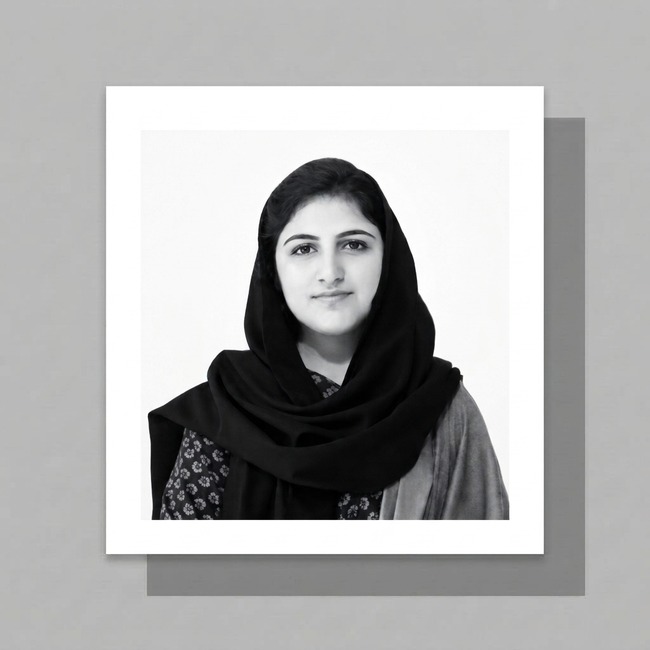
Sumreen Younas is an emerging legal scholar, writer and poet, and a final-year law student at Fatima Jinnah Women University, Rawalpindi. Her commentary in leading Pakistani newspapers and journals explores law, human rights, social policy and the responsibilities of public institutions, with particular attention to access to justice, student welfare and institutional accountability.
She received first place for an outstanding research submission through a U.S. Department of State GLO initiative involving a Fulbright Specialist and Emory University’s Center for the Study of Law & Religion.
We welcome your contributions to The Pakistan Observer, Submit your blogs, articles, press releases, news story pitches and news features.
Please send your submissions to our News Room or Editorial team.