

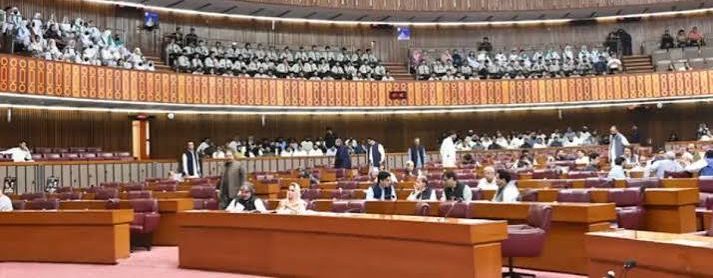
ISLAMABAD: Professional women in Pakistan’s National Assembly participated more actively in parliamentary debates and introduced more private members’ bills than women from established political families, according to a new report by The Himalayan Research Institute (THRIP).
The report, titled Same Quota, Different Voices: Elite and Professional Women Parliamentarians on Reserved Seats in Pakistan’s National Assembly, 2024–2026, was authored by Afifa Kamran and Sanwal Hussain Kharl.
Drawing on National Assembly records covering February 2024 to February 2026, the study examined 59 women who held reserved seats and compared members from established political families with those who entered Parliament through professional careers, party activism or civil society.
According to the report, 36 of the 59 women, or 61 per cent, came from established political families.
The study found that 74 per cent of professional women participated in plenary debates, compared with 42 per cent of women from established political families.
A similar difference emerged in legislative activity. The report said 35 per cent of professional women introduced at least one private member’s bill, compared with 11 per cent of their counterparts from established political families.
It also highlighted differences in the issues raised by the two groups. Professional women tended to focus on service delivery, local governance and citizens’ grievances, while women from established political families more frequently addressed national frameworks and party agendas.
The report raises concerns over reserved-seat nominations.
The report argues that Pakistan’s reserved-seat system has increasingly become a means of political patronage, with parties relying on established political families when selecting women for parliamentary representation.
According to the study, the quota system has ensured women’s presence in Parliament but has not necessarily provided equal opportunities for participation in debates and legislation.
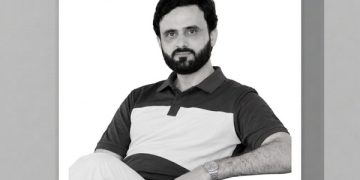
“The quota has guaranteed women a place in Parliament, but it has not guaranteed them a voice,” said Sanwal Hussain Kharl, co-author of the report and founder of THRIP.
He argued that the process through which women enter Parliament is as important as the number of seats allocated to them.
Recommendations for electoral and political reforms
The report proposes several measures to improve women’s representation and participation in elected institutions.
It recommends that political parties publicly disclose the criteria used to rank candidates on reserved-seat lists, with verification by the Election Commission of Pakistan.
It also proposes transferring nomination powers from party central leaderships to women’s wings within political parties, while reserving places on candidate lists for professional women.
Other recommendations include increasing the gender quota to 25 per cent, enforcing the existing requirement for political parties to award at least five per cent of general-seat tickets to women, and reserving 50 per cent of local government seats for women.
According to the report, greater transparency in nominations and wider opportunities for women at the local government level could help strengthen their participation in provincial and national politics.
The Himalayan Research Institute describes itself as an independent think tank researching the social, political and regional affairs of South Asia.
The report focuses on women who held reserved seats in the National Assembly during the February 2024–February 2026 period.
We welcome your contributions to The Pakistan Observer, Submit your blogs, articles, press releases, news story pitches and news features.
Please send your submissions to our News Room or Editorial team.