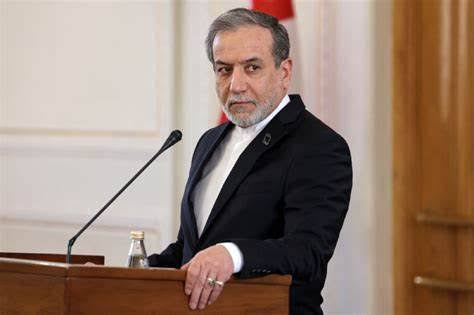
Tehran – Iranian Foreign Minister Abbas Araqchi has accused the US of repeatedly making wrong estimates based on intelligence information and said that Washington may also be suffering from a major misunderstanding in the Strait of Hormuz issue.
Abbas Araqchi said in a statement on the social networking website X that the US has been making wrong estimates about Iran based on poor intelligence for a long time. According to him, the start of the war against Iran is also an example of this series.


The Iranian Foreign Minister said that Washington is now making a bigger wrong estimate in the Strait of Hormuz issue by relying on poor intelligence. He warned the US that wrong intelligence can prove to be more dangerous than wrong information.
In his post, Araqchi made a religious reference and said that Allah is the greatest and has more power than any power on earth. He clarified that Iran trusts in Allah.
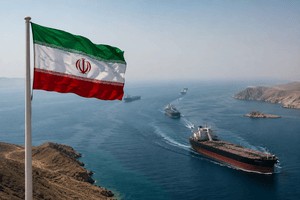
His remarks come at a time when the Strait of Hormuz has become a major issue in the US-Iranian tensions. The Strait of Hormuz, one of the world’s most important sea lanes, connects the Persian Gulf with the Gulf of Oman and the Arabian Sea and is vital for global energy transport.
Earlier, US President Donald Trump took a tough stance on Iran, demanding the elimination of the Revolutionary Guards and complete control over the Strait of Hormuz. The US president also criticised the Iranian leadership, the country’s economy and available financial resources.
In his statement, Trump linked Iran’s current situation to severe economic difficulties and said that the Iranian leadership is in an uncertain situation and the country has limited financial resources. He also described the information coming out of Iran as ‘fake news’.
However, the statement issued by the Iranian Foreign Minister reflects Tehran’s different stance on the issue. Araqchi specifically questioned the accuracy of intelligence information and warned about possible US decisions.
The Strait of Hormuz is also sensitive in this dispute because a large amount of global oil and gas passes through this route. Any prolonged obstruction or escalation of tensions here could have an impact on global energy markets, shipping costs, and oil prices.
Analytically, the strong statements coming from both sides indicate that the Strait of Hormuz is no longer just a regional security issue, but also has significant potential economic and global impacts. However, it is difficult to definitively assess what future practical steps will be based on statements alone.
In the current situation, any developments related to the Strait of Hormuz will be closely watched by global markets, the energy sector, and countries in the region. Changes in diplomatic relations and the situation on the ground could play a significant role in determining the direction of the conflict in the coming days.