

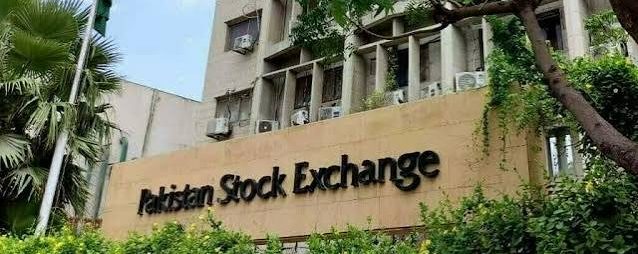
Karachi – The Pakistan Stock Exchange witnessed a stressful and volatile trading week. The benchmark KSE 100 Index closed at 180,104 points, down by 1,325 points overall. This represents a decline of about 0.73% on a weekly basis.
The market witnessed significant volatility during the week. The KSE 100 index touched a low of 179,778 points while hitting a high of 182,347 points. The index traded in a range of 2,568 points overall.
Business activity, despite the downturn, remained strong. About 3.41 billion shares were traded during the week. The total value of these transactions was Rs 152 billion.
On the other hand, the total market capitalisation of listed companies also declined. At the end of the week, the market capitalisation decreased by Rs 107 billion to about Rs 20.13 trillion.
External factors are playing a major role in the recent market trend. According to recent market reviews, the possible development between the US and Iran, uncertainty regarding the Strait of Hormuz and high global oil prices have reinforced the cautious attitude of investors.
For a country like Pakistan, which is dependent on imported energy, global crude oil prices are of particular importance. Rising oil prices could raise concerns about import bills, external accounts and inflation. These factors also influence investors’ decisions in the stock market.
Earlier in July, the PSX was under pressure due to geopolitical tensions. According to Topline Securities, the KSE 100 index fell by 4,208 points, or 2.3 percent on a monthly basis in July.
However, the overall market level is still around 180,000 points. This shows that despite the recent weekly pressure, investors have not completely disengaged from the market. The strong trading volume also indicates that the buying and selling process remained active.
Global oil prices, the geopolitical situation in the region, corporate financial results and local economic indicators will remain important for the market direction in the coming sessions. Investors are likely to focus mainly on external risks and the impact of domestic economic policy.
According to the official Pakistan Economic Survey, Pakistan’s equity market witnessed significant activity during the last fiscal year and trading volume remained high in the major market indices, including the KSE 100, until March 2026.
We welcome your contributions to The Pakistan Observer. Submit your blogs, opinion pieces, press releases and news features to our editorial team.
Please send your submissions to our News Desk or Editorial team. We look forward to hearing from writers, journalists and contributors.