


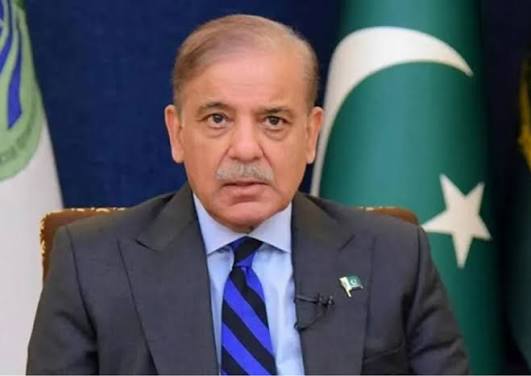
Islamabad: Prime Minister Shehbaz Sharif has directed the acceleration of the reform process in the Federal Board of Revenue (FBR) and improved transparency in the tax collection system. He made it clear that action will be taken against officials who are corrupt and consistently perform poorly.
The prime minister gave these instructions while chairing a weekly review meeting on FBR affairs on Monday. The meeting reviewed the progress of ongoing reforms and their initial results.
According to sources, the meeting was told that as a result of reform measures, the estimated tax gap has come down from 6 percent of GDP to 5 percent during the last three years. ‘Tax gap’ refers to the difference between potential tax collections and actual tax collections. However, this reduction cannot be equated with an increase in tax collections or complete elimination of tax evasion.
The prime minister also stressed on accelerating the implementation of a faceless system in tax collection areas. The aim of this system is to reduce the possibility of human intervention and arbitrary use of powers by limiting direct contact between taxpayers and the concerned officers.
The meeting was told that the use of technology has reduced the discretionary powers of FBR officers. To enhance the audit capacity of the institution, 957 third-party auditors have also been recruited on merit basis. According to an official briefing, the audit capacity has quadrupled with this initiative.
New officers are being trained at the Lahore University of Management Sciences (LUMS) to improve their professional skills, while training programs are also underway for already serving officers. The meeting was also briefed about the introduction of a peer rating system to evaluate the performance of officers.
Shahbaz Sharif said that reforms are in the national interest and their process should continue. He directed that officers who show good behavior and performance should be given an opportunity to reform themselves, while indiscriminate action should be taken against those who insist on corruption and poor performance.
The success of FBR reforms will depend not only on technological and administrative changes but also on taxpayer confidence, uniform implementation of the law and widening the tax net. The main challenge for the government is to improve tax collection while making the system transparent and understandable for the common citizens.