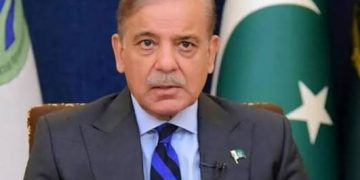


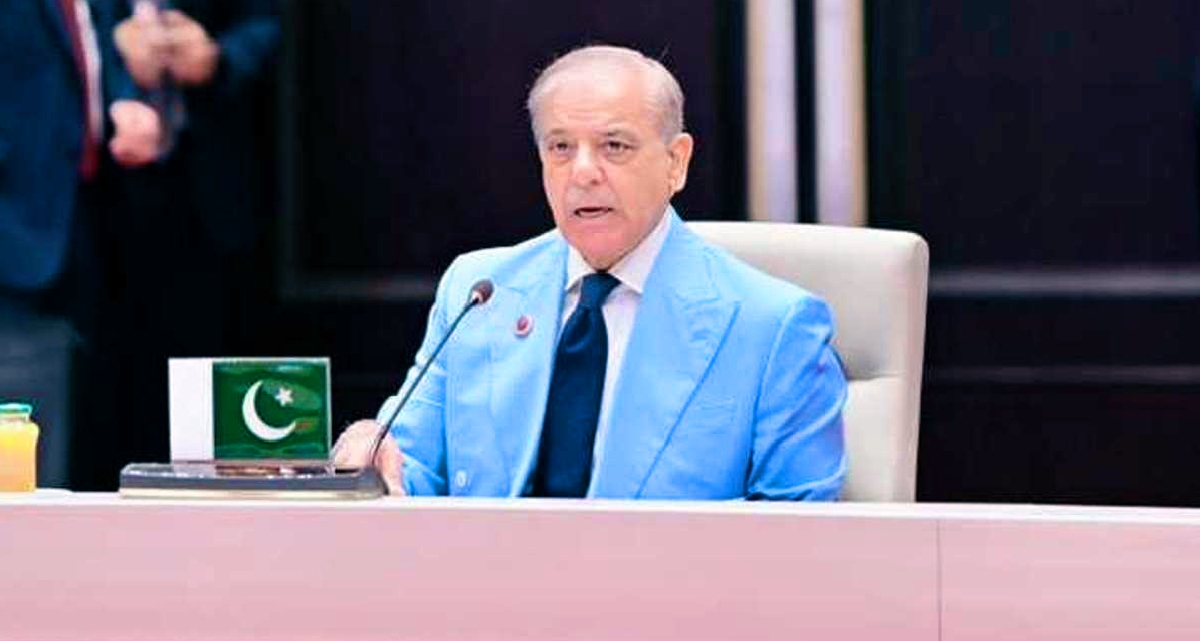
Prime Minister Shehbaz Sharif, while addressing the Shanghai Cooperation Organization (SCO) summit, termed regional peace, water security and economic connectivity as important for the future of the region and said that shared water resources should not be used for political pressure.
Addressing the SCO Heads of State meeting in Bishkek, the Prime Minister said that water is linked to the lives and agriculture of millions of people in the region. Therefore, it cannot be used as a tool to put pressure on any country.
Shahbaz Sharif said that agreements related to shared water are not just political agreements but international obligations. They should be implemented according to their spirit and letter. The Prime Minister also raised the issue of the Indus Waters Treaty without naming any country.
The Prime Minister’s stance came against the backdrop of growing tension between Pakistan and India over the issue of water. Islamabad has consistently taken the position that the agreement related to the Indus River system cannot be suspended or changed unilaterally.
Shahbaz Sharif said in his address that peace is a basic condition for sustainable development in the region. According to him, in an environment of constant tension, SCO countries cannot fully utilise their economic potential.
Pakistan has also assumed the chairmanship of the SCO for 2026-27 with this meeting. The Prime Minister has included connectivity, innovation and shared prosperity as the main priorities during his leadership of the organisation.
Islamabad has expressed its determination to increase cooperation in information technology, artificial intelligence, energy, health, poverty reduction, disaster management, culture and sports through the SCO platform.
The Prime Minister also proposed a common framework for cooperation between SCO member states in the field of artificial intelligence. Its aim is to advance joint initiatives for AI infrastructure and its responsible governance.
Shahbaz Sharif described regional connectivity as an important part of Pakistan’s economic strategy. He said that better roads, railway systems, secure energy routes and robust supply chains can increase trade between countries in the region.
He also described the China-Pakistan Economic Corridor as an important project for regional connectivity. According to the Prime Minister, Pakistan is interested in advancing rail, road and energy projects to increase trade links with Central Asia and other regions.
On the issue of regional security, the Prime Minister termed terrorism a major threat. He said that Pakistan has suffered heavy loss of life and economic losses in the war against terrorism.
The Prime Minister also clarified Pakistan’s position on Afghanistan. He said that Pakistan wants to see a peaceful and stable Afghanistan, but the territory of no country should be used for terrorism against Pakistan.
He also stressed the need to further strengthen cooperation under the SCO’s regional counter-terrorism mechanism. According to him, joint efforts against terrorism, extremism and separatism are essential for lasting peace in the region.
On the sidelines of the SCO meeting, Deputy Prime Minister and Foreign Minister Ishaq Dar also held meetings with important leaders of various countries. He discussed the regional situation and bilateral relations with the foreign ministers of China, Iran, Russia and other countries.
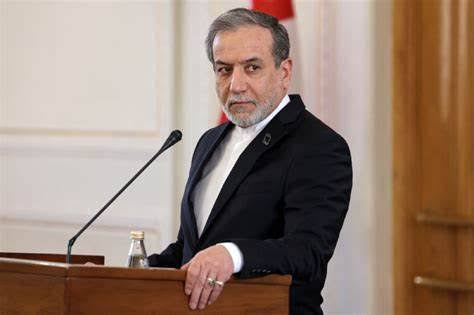
Ishaq Dar’s meeting with Iranian Foreign Minister Abbas Araqchi discussed the regional situation and diplomatic efforts. Dar stressed the need to advance dialogue and diplomacy to reduce tensions.
In a meeting with Chinese Foreign Minister Wang Yi, Pakistan and China reiterated their commitment to further strengthen bilateral partnership. The two sides also exchanged views on global and regional issues.
Ishaq Dar also met with the head of Turkey’s National Intelligence Organization, Ibrahim Kalin. During this, they discussed the regional situation, issues of mutual interest and the progress made in the Mecca Joint Defence Agreement.
In a meeting with Russian Deputy Prime Minister Alexei Overchuk, it was agreed to further expand Pakistan-Russia relations. The two sides also discussed the importance of continuing trade, cooperation and high-level contacts.
The situation in Gaza and Palestine was also part of the Prime Minister’s address at the SCO summit. Shahbaz Sharif urged the international community to take effective steps for the fundamental rights and right of self-determination of the Palestinian people..
The Prime Minister also stressed the need for reforms in the United Nations. According to him, in the changing global situation, there is a need to make international institutions more effective, accountable and representative.
During Pakistan’s SCO chairmanship, Lahore has also been declared the organization’s tourism and culture capital for 2026-27. This decision will provide Pakistan with an opportunity to enhance people-to-people, cultural and tourism ties with member states.
Overall, Pakistan has started the new SCO chairmanship with a broad agenda. Islamabad’s priorities include peace and security, as well as trade, regional connectivity, technology and economic cooperation.
The crucial step for Pakistan now is to translate these priorities into practical actions. If there is real progress in trade ties, regional projects and joint technology initiatives during the chairmanship, it could prove to be a major achievement for Pakistan’s regional diplomacy and economic ties.