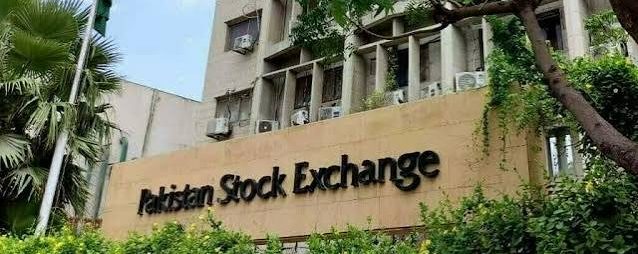


Karachi — The Pakistan Stock Exchange (PSX) witnessed a mild downturn on Wednesday as the benchmark KSE-100 Index closed lower following selling pressure in key sectors.
The index declined by 318.64 points, representing a 0.20 percent decrease, and settled at 155,858.48 at the end of the trading session on March 11, 2026.
Although the decline was relatively modest, it reflected a cautious approach among investors after recent gains in the market.
The trading session began with moderate optimism. The KSE-100 index opened at 157,206.97, and early buying activity helped the market climb to an intra-day high of 158,624.52.
However, the upward momentum did not last throughout the session. As the day progressed, selling pressure began to emerge, pushing the index downward. The market eventually touched an intra-day low of 155,652.36 before closing slightly higher than that level.
Despite the negative closing, trading activity remained strong. Data showed that 232.66 million shares of index constituent companies were traded during the session.
Market experts say that such trading volumes indicate that investors remained active even as the market experienced a decline.
One of the primary reasons behind the drop appears to be profit-taking by investors, a common occurrence after markets record a series of gains. Investors often sell shares to secure profits, which can temporarily push the market downward.
In addition to profit-taking, investors are also closely watching economic indicators such as inflation levels, interest rate trends, and overall economic performance in Pakistan.
Global financial trends and geopolitical developments can also influence market sentiment, especially in emerging markets like Pakistan.
While several stocks contributed to the market’s decline, others managed to provide support to the index.
Engro Corporation emerged as the top positive contributor, adding 308.64 points to the index. Other stocks that helped support the market included Bank Al-Habib, Askari Bank, National Bank of Pakistan, and Adamjee Insurance.
On the other hand, several major companies acted as draggers. United Bank Limited was the largest negative contributor, followed by Pakistan Petroleum Limited, Oil and Gas Development Company, Meezan Bank, and Mari Petroleum.
These companies belong to major sectors such as banking and oil and gas, which carry significant weight in the KSE-100 index.
Despite the day’s decline, the broader performance of the market still shows strength over the longer term. The KSE-100 index has recorded a 24.06 percent gain in the fiscal year-to-date period, reflecting strong growth earlier in the fiscal year.
However, the calendar year-to-date performance shows a decline of 10.45 percent, suggesting that the market has recently faced some pressure.
Analysts believe the coming days will be important in determining the market’s direction. Investors will continue to monitor corporate earnings announcements, economic indicators, and global developments to assess the future outlook for the Pakistan Stock Exchange.
| Open | 157,206.97 |
| High | 158,624.52 |
| Low | 155,652.36 |
| Close | 155,858.48 |
| Change (Points) | -318.64 |
| Change (%) | -0.20% |
| Volume (Mn) | 232.66 |
| FYTD Return | 24.06% |
| CYTD Return | -10.45% |
| Top Pullers (Contribution) | |
|---|---|
| ENGROH | +308.64 |
| BAHL | +181.90 |
| AKBL | +87.28 |
| NBP | +82.72 |
| AICL | +63.84 |
| Top Draggers (Contribution) | |
|---|---|
| UBL | -212.69 |
| PPL | -128.21 |
| OGDC | -117.19 |
| MEBL | -92.82 |
| MARI | -83.07 |
We welcome your contributions to The Pakistan Observer. Submit your blogs, opinion pieces, press releases and news features to our editorial team.
Please send your submissions to our News Desk or Editorial team. We look forward to hearing from writers, journalists and contributors.