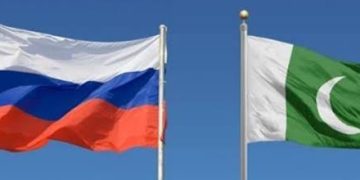


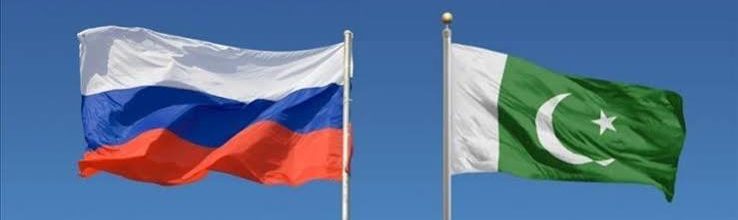
Economic cooperation between Pakistan and Russia has seen progress, with bilateral trade between the two countries recording an 11 percent increase this year. Moscow has expressed its willingness to increase cooperation with Pakistan in energy, health, local pharmaceutical manufacturing and infrastructure projects. On the other hand, Pakistan has demanded in the UN Security Council that decisions regarding the use of nuclear weapons should be fully under human control and that artificial intelligence should not be used to target nuclear command systems.
ISLAMABAD: Pakistan and Russia are moving to expand their economic partnership, with bilateral trade registering an 11 percent increase this year and Moscow expressing interest in new cooperation in the energy, healthcare and infrastructure sectors.
The progress was highlighted during the 11th meeting of the Pakistan-Russia Intergovernmental Commission (IGC) on Trade, Economic, Scientific and Technical Cooperation held in Moscow on November 25.
Russian Energy Minister Sergei Tsvelev said that bilateral trade turnover has increased by 11 percent, reflecting the growing economic engagement between the two countries.
He reiterated Russia’s commitment to strengthening cooperation with Pakistan and highlighted opportunities for new agreements covering energy, industrial development and infrastructure.
In the healthcare sector, Russia is exploring localizing insulin production in Pakistan to improve cooperation in domestic drug manufacturing and medical services.
Moscow has also expressed its readiness to assist Pakistan in the rehabilitation and modernization of infrastructure projects. The two countries are exploring additional opportunities to expand investment and technical cooperation.
The two sides also agreed to increase bilateral trade to $5 billion by 2030 under a five-year program of economic cooperation for 2026-2030.
The agreement was reached at the 11th IGC meeting, co-chaired by Pakistan’s Energy Minister Sardar Owais Ahmed Khan Leghari and Russia’s Energy Minister Sergei Tsavelyev.
The program identifies trade, investment, energy, agriculture, pharmaceuticals, transport, education, science and technology as key areas for future cooperation.
In addition, Pakistan has called for stricter human control over decisions related to nuclear weapons, raising concerns about the growing role of artificial intelligence in military operations.
Addressing a high-level debate on technological developments and international security at the UN Security Council, Pakistan’s Permanent Representative to the UN, Ambassador Syed Haider Shah, stressed that decisions regarding the use of nuclear weapons should remain under human control.
He also warned that artificial intelligence systems should never be used to target nuclear command, control and communication systems.
The Pakistani envoy said that the rapid development of emerging technologies could increase the speed and complexity of military operations, increasing the risk of miscalculation and unintentional escalation.
He called for international safeguards, regulatory frameworks and accountability mechanisms to ensure that technological developments do not accelerate a global arms race.
Shah also stressed the importance of international cooperation, confidence-building measures and restraint to reduce security threats.
He further argued that developing countries should have equal access to emerging technologies and be involved in international discussions on their regulation.
Pakistan’s stance reflects growing international concerns about the implications of artificial intelligence for military decision-making, strategic stability, and nuclear security.
Both developments highlight Pakistan’s parallel engagement in enhancing international economic partnerships and addressing emerging challenges to global security.
We welcome your contributions to The Pakistan Observer, Submit your blogs, articles, press releases, news story pitches and news features.
Please send your submissions to our News Room or Editorial team.