

Islamabad – The World Bank has described the implementation progress of the $245 million Integrated Flood Resilience and Adaptation Project (IFRAP) in Balochistan, which is being implemented to rehabilitate the population affected by the 2022 floods and address future flood risks, as “moderately unsatisfactory”.
According to the World Bank’s recent review report, progress in the project has not been uniform across all segments. Government decisions, especially regarding the construction of resilient housing for flood victims, have increased pressure on achieving the project’s goals.


According to the bank, more than 74,000 households have received the first tranche of housing assistance; however, issues such as limiting the number of beneficiaries, lack of financial resources for the remaining eligible households, grievance redressal, and effective information dissemination to the affected population still remain.
After additional financial support for IFRAP, the total IDA credit amount of the project reached $245 million. According to the World Bank, the additional funding was intended to support the rehabilitation of more eligible households affected by the 2022 floods in Balochistan.
The infrastructure component of the project includes irrigation and rehabilitation of roads and bridges. According to the World Bank’s assessment, significant progress has been made in the planning and bidding documents for this sector, while the procurement process has also begun.
However, the three development indicators associated with this component have not yet achieved the desired results. This situation shows that there is still a significant gap between project preparation and practical implementation.
The second component includes early warning systems and meteorological and hydrological services. According to the World Bank, activity in this sector has increased following the appointment of a new deputy project director and the contract for automatic meteorological stations.
However, some key procurement steps, including the appointment of a system integrator, have not been completed. Such systems are considered important for improving timely flood notification and local response in a climate-vulnerable province like Balochistan.
Progress on residential rehabilitation has also changed the rating of some project risks. The World Bank has moved the risks related to sectoral policy and technical design of the project to “high”. The risk related to institutional capacity has also been rated as more significant than before.
Environmental and social quality has also emerged as a significant issue. The World Bank’s technical review found that despite significant changes in the scope of the project, the required consultations with affected and vulnerable communities were not conducted. This raised questions about the project’s compliance with relevant environmental and social criteria.
Under the project agreement, the government was required to submit a revised Project Implementation Manual to incorporate the changed management procedures. According to the review, this document was not submitted within the stipulated period, leading to the relevant legal requirement being rated as “not complied with”.
Progress on annual work plans and budgets has also been incomplete. The plan for the fiscal year 2025-26 was submitted to the World Bank for approval, but plans for several implementing units for 2026-27 are still pending.
The World Bank warned that the delay in annual plans could raise questions about the eligibility of expenditures in the current fiscal year. The importance of this issue is also increased because the plan is moving forward in collaboration with several federal and provincial agencies.
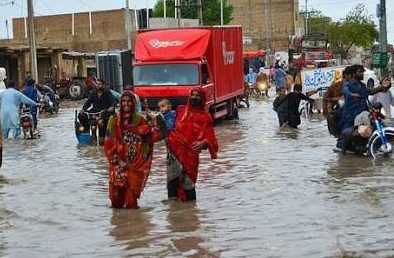
IFRAP was launched in Balochistan to recover from the devastating 2022 floods and to address future climate risks. According to the World Bank, the plan aims to restore jobs and basic services to the affected population and improve long-term resilience to floods.
The plan includes sectors such as irrigation, water, roads, flood protection, meteorological information and early warning systems, along with residential reconstruction. The 2022 floods in Balochistan caused severe damage to housing and infrastructure, which significantly increased the rehabilitation needs.
In this context, the new World Bank rating is not just a matter of financial progress. The project’s goals include transparent beneficiary identification, timely redressal of grievances, inter-institutional coordination, and fulfilment of environmental and social requirements.
On the other hand, the Ministry of Planning has said that the government is in constant contact with the World Bank on development projects. According to the ministry, the government’s priority is to effectively utilise international financial assistance under the approved methodology, keeping in mind the needs of the citizens of Balochistan.
The ministry appreciated the cooperation of the World Bank and expressed hope for smooth completion of the projects. This stance shows that the federal government is trying to resolve the current administrative and implementation issues with the World Bank through negotiations.
According to the World Bank, the performance of the project will be reassessed during the next review mission. At this stage, progress on housing assistance, pending annual projects, grievance redressal, and environmental and social conditions will be important for the overall rating of the project.