

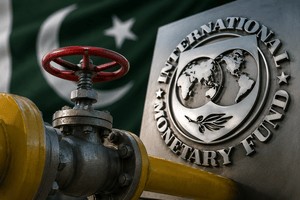
ISLAMABAD: The International Monetary Fund (IMF) has stressed the need for the government to follow the cost recovery principle in determining gas prices in Pakistan. The Fund is of the view that if the government charges less than the rates set by the regulator, the fiscal deficit and circular debt in the gas sector may increase.
The recent reviews focused on the tariff differential in the gas sector and its financial impact. Pakistan has agreed with the IMF on various reform measures regarding regular adjustments in gas prices and implementation of prices set by OGRA.
According to the latest IMF document, OGRA makes tariff adjustments in the gas sector, and the government has committed to issuing semi-annual gas tariff adjustments on July 1, 2026, and February 15, 2027. The aim is to keep energy prices close to cost recovery and reduce the financial pressure on the sector.
According to the legal framework of OGRA, the authority determines tariffs and related revenue requirements for regulated activities related to the transmission, distribution and sale of natural gas.
Timely changes in gas prices have also been considered important in the reforms agreed upon between Pakistan and the IMF. According to the IMF, regular price adjustments, loss reduction and financial monitoring are necessary to control circular debt in the gas sector.
The circular debt of the gas sector is already a major financial challenge for the government. According to a report in July 2026, the circular debt of the sector had crossed Rs 3.44 trillion. In this context, the government must avoid such decisions in gas prices that further increase the gap between revenue and cost.
The real challenge for the government is to pass on a fair share of the cost in gas prices to consumers while also protecting low-income household consumers from unnecessary financial burden. Recent IMF documents also emphasise the need to align gas tariffs with the cost recovery principle while protecting vulnerable domestic consumers.
Experts say that if the gap between gas prices and actual costs continues to widen, the burden will ultimately shift to gas companies, the government, and the financial system. It will therefore be important for the government to strike a balance between transparency in pricing, timely adjustments, and targeted protection for low-income consumers.
We welcome your contributions to The Pakistan Observer. Submit your blogs, opinion pieces, press releases and news features to our editorial team.
Please send your submissions to our News Desk or Editorial team. We look forward to hearing from writers, journalists and contributors.