


Islamabad: The federal government has approved 24 development projects worth a total of Rs 465.76 billion to strengthen national security, digital sovereignty and development infrastructure. These projects include a secure mobile communication network for government agencies, Pakistan Communication Satellite-2 (PakSat-2), an artificial intelligence-based data centre, railways, highways and several energy projects.
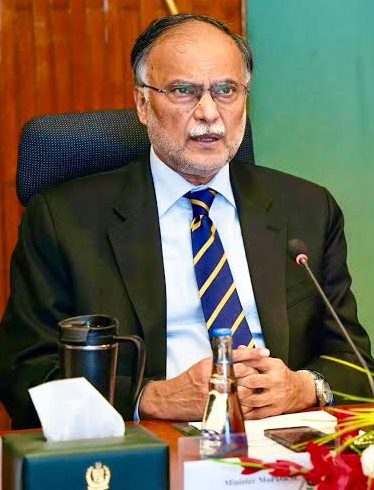
These decisions were taken in a meeting of the Central Development Working Party (CDWP) chaired by Federal Minister for Planning Ahsan Iqbal, where 15 projects were directly approved while 9 major projects were sent to the Executive Committee of the National Economic Council (ECNIC) for final approval.


The meeting discussed in detail the national security-related “Pak Awaz Secure Mobile Communication Ecosystem” project worth Rs 709 million. The project aims to establish a secure mobile network for at least 10,000 government users that is completely isolated from the public internet and secures the exchange of sensitive government information.
According to sources, the Planning Commission, while emphasizing the need for further improvement in the technical specifications of the project, directed the National Telecommunication Corporation (NTC) to develop a system that is completely secure, reliable and invulnerable as per the requirements of national security, after consulting all relevant agencies. The project will include advanced features such as secure video and audio calls, messaging, file sharing, central contact list, application servers, dedicated mobile phones and remote “kill switch”.
According to officials, the weaknesses in the government communication system were reviewed after the recent regional tensions and events in the Middle East, after which the proposal to establish a completely separate private 4G LTE core network came up to reduce the chances of leakage of sensitive information.
The meeting also gave in-principle approval to other important projects in the information technology sector. These include the establishment of an Emerging Technologies Data Centre at a cost of about Rs 7.93 billion, which will provide a secure infrastructure for artificial intelligence, cloud computing, high-performance computing and government digital services at the national level. The project is expected to reduce dependence on foreign cloud services and boost the local digital economy.
Similarly, the National Artificial Intelligence Ecosystem Development Program worth Rs 13 billion was also approved in principle, under which a comprehensive study of the current capacity, investment, legal framework and technical requirements of the artificial intelligence sector in the country will be conducted to formulate a future national strategy.
The meeting also included the Pakistan Communication Satellite-2 (PakSat-2) project at a cost of Rs 37.19 billion in the recommendations for ECNIC. This satellite will replace the existing PakSat-IR, whose 15-year operational period is completing this year. The project will also modernize the existing ground control centers in Lahore and Karachi so that Pakistan can maintain its satellite capacity and international orbital slots.
Several major projects were also approved in the transport sector, including Lala Musa Bypass, ML-3 Railway Upgradation, Mashkhel-Chhidgi Road, Rathua Haryam Bridge and other infrastructure projects. In addition, the establishment of a Special Protection Unit in Islamabad, improvement of the electricity transmission system in Azad Kashmir and other development schemes were also approved.
Experts say that these projects approved by the government will not only help in strengthening national security and digital sovereignty but will also provide a foundation for long-term development in important sectors such as information technology, communications, transport, energy and artificial intelligence.