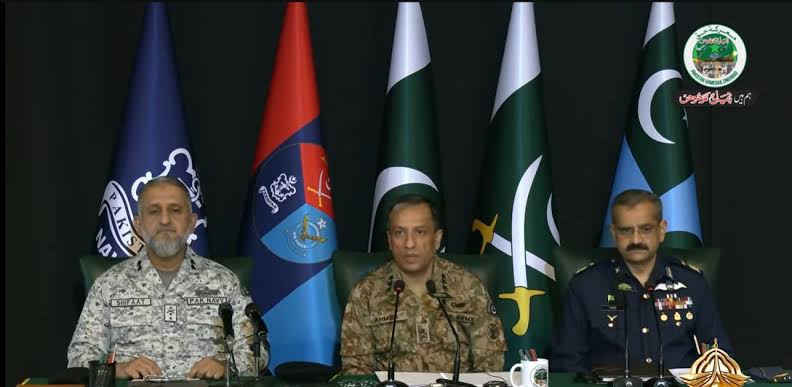

Air Vice Marshal Tariq Ghazi shared significant technical insights into the aerial combat, stating that the PAF was monitoring every enemy movement with precision. The most notable revelation was the destruction of eight Indian fighter jets, including four of the much-touted Rafale aircraft. “India is still trying to understand what exactly happened,” Ghazi remarked, attributing the success to advanced electronic warfare and the PAF’s cyber capabilities which blinded the enemy’s communication networks. He noted that the fear of Pakistan’s response has since kept the Indian Air Force away from the border.
Representing the Pakistan Army, the DG ISPR touched upon the internal and external security challenges. He stated that the military is currently fighting a war against “Kharijites” (terrorists) and proxies launched by India.
He emphasized that the bond between the public and the armed forces is unbreakable, describing the Pakistan Army as a “poor man’s army” rather than an elite institution. The DG ISPR also highlighted the strategic depth of Pakistan’s relationship with Saudi Arabia, stating that any threat to the Kingdom is considered a threat to Pakistan.
On the ideological front, the military leadership sent a clear message regarding regional hegemony. The DG ISPR questioned the “obsession” with the concept of a Greater India (Akhand Bharat), stating that India cannot dictate the destiny of the region’s people.
The briefing concluded with a tribute to the martyrs, with Air Vice Marshal Ghazi stating that PAF pilots operate without fear, valuing martyrdom as the ultimate ornament of a soldier. The leadership reiterated that while Pakistan seeks regional stability, it is fully prepared for the “wars of the future” through modern technological integration and unwavering national resolve.