


The Central Development Working Party (CDWP) has approved 11 development projects worth Rs 191.8 billion. The approved projects include the establishment of two new border terminals on the Pakistan-Iran border.
ISLAMABAD: The Central Development Working Party (CDWP) has reviewed 11 development projects worth Rs191.8 billion, approving seven schemes worth Rs19.3 billion and recommending four projects costing Rs172.4 billion to the Executive Committee of the National Economic Council (ECNEC) for final approval.
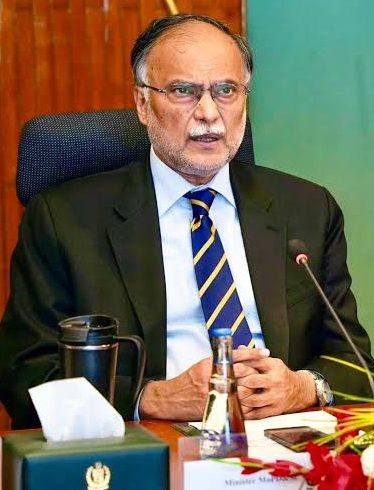
The meeting was chaired by Federal Minister for Planning, Development and Special Initiatives Ahsan Iqbal on Friday. The forum assessed projects across several sectors, including agriculture, infrastructure, health, employment, transport and communications.
Among the key decisions, the CDWP approved the establishment of two new border terminals along the Pakistan-Iran border. The Taftan terminal in Balochistan’s Chaghi district has an estimated cost of Rs4.80 billion, while the Gabd terminal will cost approximately Rs4.35 billion.
The terminals are intended to improve the regulation of cross-border trade, create employment opportunities, help curb smuggling and facilitate the movement of goods through formal trade channels.
In the agriculture sector, the CDWP recommended Punjab’s Resilient and Inclusive Agriculture Transformation (PRIAT) project, worth Rs104.4 billion, to ECNEC. The initiative aims to improve farmers’ incomes, expand access to agricultural water and promote more efficient water use.
The forum also gave in-principle approval to the revised Prime Minister’s Youth Skill Development Programme, valued at Rs47.6 billion, and referred it to ECNEC for further consideration.
Two road infrastructure projects in Balochistan, including the Sibi-Talli and Kohlu-Rakhni roads and a blacktop road connecting Sui with Kashmore, were also recommended to ECNEC.
Other approved initiatives include a Rs4.4 billion project to expand cellular services in Azad Jammu and Kashmir and Gilgit-Baltistan, a Rs600 million youth employment and skills development programme in Sindh, and infrastructure projects in the health and energy-related sectors.
The Sindh youth initiative aims to benefit 15,000 young people across 16 districts through skills training, entrepreneurship support, internships and employment opportunities, with women expected to account for around half of the beneficiaries.
The distinction between approval and recommendation is important: seven projects have received CDWP approval, while the four referred schemes require further consideration and final approval by ECNEC.