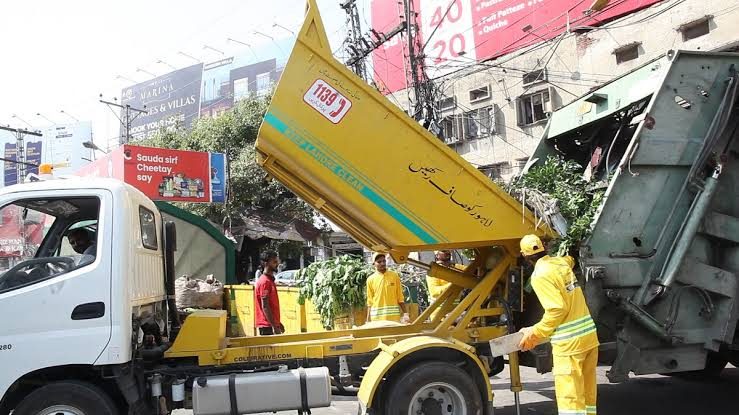

Lahore: Under the “Clean Punjab” project in Punjab province, the government has decided to reorganize the sanitation system in Lahore, under which the excise department will now directly collect the sanitation bill. This move is being described as an attempt to reduce the financial pressure on local governments and make the sanitation system self-sufficient.
According to a government announcement, the sanitation bill will be collected on a monthly basis from January 2026, so that citizens can get used to the new system. After that, the annual collection of sanitation bills will officially start from June 2026.
The most important relief in the new system is the exemption of houses up to 3 marla from the sanitation bill, which the government has declared as an important facility for the low-income group. However, large houses and commercial users will have to contribute to the sanitation costs.
According to the details, domestic users in urban areas from 5 marla to 2 kanal will have to pay a sanitation bill of Rs 300 to 2000. For commercial users, this amount has been set at Rs 500 to 2000 in urban areas. For domestic users in rural areas, the sanitation bill has been set at Rs 200 to 400, while for rural commercial users, it has been set at Rs 300 to 1000.
According to government officials, the sanitation bill money will be spent on sanitation staff, machinery, fuel and garbage collection system. They say that this step had become inevitable to meet the increasing sanitation costs in a big city like Lahore.
According to public policy experts, the new sanitation bill system will be successful only when citizens see clear benefits in return. According to a policy analyst,
“If the bill is collected regularly but there is no difference in the cleanliness of the streets and roads, the public reaction may be negative.”
Experts say that the collection system through excise billing can be strengthened, but the government will have to bring the details of the use of this money to the public to maintain trust.