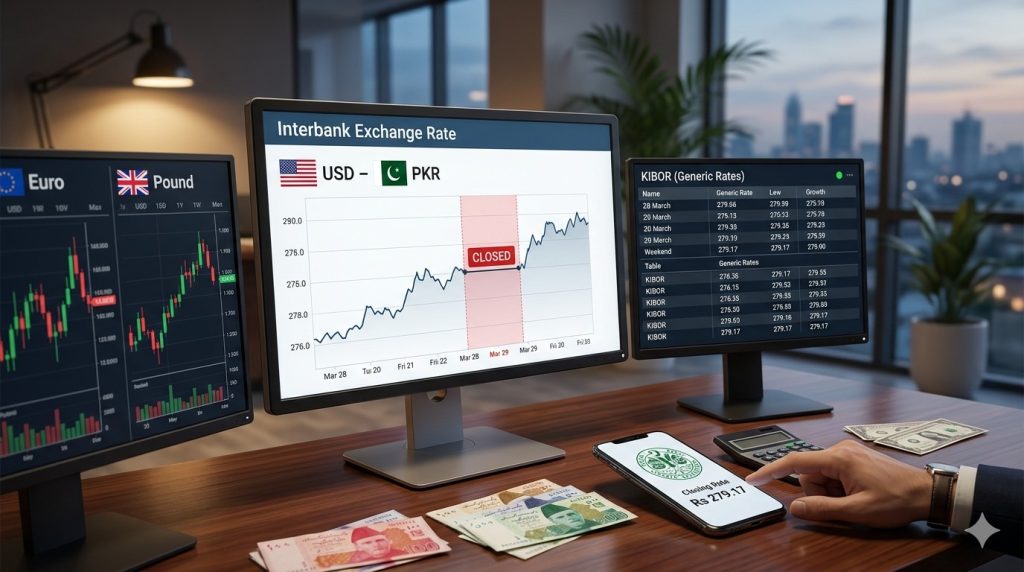


Karachi: Major foreign currencies are trading actively against the Pakistani Rupee today, as the exchange market is continuing to reflect pressure on the national economy. The US dollar is trading at Rs. 280.25 for buying and Rs. 282.20 for selling, while the UK pound sterling is standing at Rs. 376.98 for buying and Rs. 381.23 for selling in the open market.
The Omani Riyal is being traded at Rs. 726.86 for buying and Rs. 736.36 for selling. The UAE Dirham is moving at Rs. 76.35 for buying and Rs. 77.35 for selling, while the Saudi Riyal is trading at Rs. 74.75 for buying and Rs. 75.50 for selling. Meanwhile, the Canadian Dollar is exchanging at Rs. 203.09 for buying and Rs. 206.58 for selling.
The exchange rate trend is continuing to influence Pakistan’s import-based economy. The US dollar is remaining the primary settlement currency for oil, machinery, and industrial raw materials. As the dollar is maintaining a higher level, import costs are increasing, and businesses are adjusting retail prices accordingly.
The pound sterling is also playing a critical role in Pakistan’s textile exports to the United Kingdom. As the GBP is remaining strong, exporters are finding opportunities in foreign earnings, but rising input costs are balancing the gains.
Currencies from Gulf countries — including the Omani Riyal, UAE Dirham, and Saudi Riyal — are continuing to hold major importance due to worker remittances. Millions of Pakistanis are working in the Middle East, and they are sending funds back home regularly. As these currencies are staying firm, remittance inflows are supporting household incomes and stabilising foreign exchange reserves.
The Canadian dollar is influencing education payments and immigration-related transfers. Pakistani students studying in Canada are sending tuition payments abroad, and exchange rate movements are affecting overall education expenses.
Overall, the currency market is reflecting broader economic adjustments. Policymakers are monitoring foreign inflows, exports, and trade balances as exchange rates are shaping inflation, fuel prices, and industrial costs across Pakistan. The rupee’s performance is continuing to remain central to economic stability discussions nationwide.