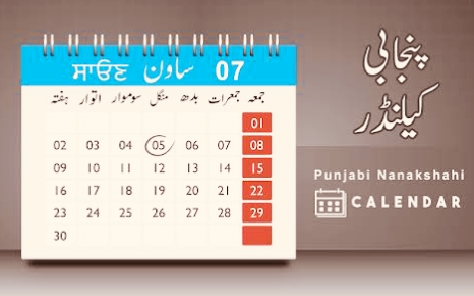

Lahore: Today, it is Sunday, February 22, 2026, which corresponds to the 11th of ਫੱਗਣ (Phaggaṇ), 557, on the Punjabi calendar.
| Punjabi Date Today | |
|---|---|
| Gregorian Date | Sunday, February 22, 2026 |
| Punjabi Date (Nanakshahi) | 11 ਫੱਗਣ (Phaggaṇ) 557 |
| Short Punjabi Date | 11/12/557 |
Punjabi Days of the Week
Following are the Punjabi days of the week:
| Punjabi Days ( ਪੰਜਾਬੀ ਦਿਨ) | |
|---|---|
| Sunday | ਐਤਵਾਰ (Aitvār) |
| Monday | ਸੋਮਵਾਰ (Somvār) |
| Tuesday | ਮੰਗਲਵਾਰ (Maṅgalvār) |
| Wednesday | ਬੁੱਧਵਾਰ (Buddhvār) |
| Thursday | ਵੀਰਵਾਰ (Vīrvār) |
| Friday | ਸ਼ੁੱਕਰਵਾਰ (Shukarvār) |
| Saturday | ਸ਼ਨੀਵਾਰ (Shanīvār) |
The Desi Calendar: Punjab’s Connection to the Earth
The Punjabi calendar is a solar-based system that has been used for over 2,000 years across the plains of the Indus. In Pakistan, it remains the primary reference for farmers (Kisaan) to determine when to sow wheat or harvest sugarcane.
History of the Punjabi Date
The calendar is named after King Vikramaditya and started in 57 BCE. It was designed by ancient astronomers who tracked the sun’s entry into different zodiac signs (Rashis). For centuries, this was the official calendar of the Punjab region before the British era and the partition. Even today, in Pakistani Punjab, elderly villagers often do not know their “English” birth date but can tell you exactly which Desi month they were born in.
Significance in Pakistan
- Agriculture: The seasons of Rabi and Kharif are perfectly aligned with these months.
- Culture: Festivals like Mela Chiraghan (Festival of Lights) in Lahore and various Sufi Urs (Sultan Bahu, Baba Farid) are often tied to these dates.
- Language: Punjabi poetry and Sufi literature (like the Barah Maha) are entirely structured around these 12 months.
In the heart of Pakistan’s Punjab, the Desi Calendar (Bikrami) is a living tradition that dictates the rhythm of the soil. Here is a detailed journey through the twelve months, each reflecting a unique phase of the Punjabi landscape and lifestyle.
Punjabi Months with Gregorian Dates (Nanakshahi Calendar)
In the heart of Pakistan’s Punjab, the Desi Calendar (Bikrami) is a living tradition that dictates the rhythm of the soil. Here is a detailed journey through the twelve months, each reflecting a unique phase of the Punjabi landscape and lifestyle.
| Month No. | Punjabi Month (ਪੰਜਾਬੀ ਮਹੀਨਾ) | Gregorian Start | Gregorian End |
|---|---|---|---|
| 1 | ਚੇਤ (Chet) | March 14 | April 13 |
| 2 | ਵੈਸਾਖ (Vaisākh) | April 14 | May 14 |
| 3 | ਜੇਠ (Jeṭh) | May 15 | June 14 |
| 4 | ਸਾਵਣ (Harh) | June 15 | July 15 |
| 5 | ਸਾਵਣ (Sāvaṇ) | July 16 | August 15 |
| 6 | ਭਾਦੋਂ (Bhādon) | August 16 | September 14 |
| 7 | ਅੱਸੂ (Ass ū) | September 15 | October 14 |
| 8 | ਕੱਤਕ (Kattak) | October 15 | November 13 |
| 9 | ਮੱਘਰ (Magghar) | November 14 | December 13 |
| 10 | ਪੋਹ (Poh) | December 14 | January 12 |
| 11 | ਮਾਘ (Māgh) | January 13 | February 11 |
| 12 | ਫੱਗਣ (Phaggaṇ) | February 12 | March 13 |
1. Chet (March 14 – April 13)
Chet is the month of rebirth and the official start of the Punjabi New Year. In Pakistan, this month signifies the end of the biting cold and the arrival of Bahār (spring). The mustard fields turn a vibrant yellow, and the fragrance of citrus blossoms fills the air in districts like Sargodha. It is a time of hope and preparation for the major harvest ahead.
2. Vaisakh (April 1–May 13)
Vaisakh is perhaps the most celebrated month for the Pakistani farmer. It is the month of the wheat harvest. The landscape turns into a sea of gold. Across the plains of Gujranwala and Multan, the sound of traditional drums (Dhol) can be heard as farmers celebrate the “Sohni Dharti” (Beautiful Land). The weather begins to warm up significantly.
3. Jeth (May 14 – June 14)
As Jeth arrives, the intense Pakistani summer takes hold. The sun is at its peak, and the “Loo” (hot winds) begins to blow across the Thal desert and central Punjab. It is a month of hardlabourr under a burning sky, where the shade of a banyan or pipal tree becomes the greatest luxury for a traveller.
4. Harh (June 1–July 15)
Harh is the peak of the heatwave. In Pakistan, the temperature often crosses 45°C during this time. The earth becomes parched, and everyone looks toward the sky for any sign of a cloud. It is the month of endurance, characterised by long, sweltering days and short, humid nights.
5. Sawan (July 16 – August 15)
Sawan is the most beloved month in Punjabi poetry and music. The monsoon finally breaks the heat. In Pakistan, Sawan means rain-drenched streets, children playing in the mud, and the smell of fried pakoras. The “Peengh” (swings) are hung from trees, and the Baradari gardens of Lahore come alive with the sound of rain.
6. Bhadon (August 16 – September 14)
Bhadon brings “Humas” (extreme humidity). While the rains continue, the air becomes heavy and still. However, for the Pakistani farmer, this is a month of growth. The rice paddies (Basmati) in the Kalar tract (Sialkot/Sheikhupura) grow rapidly in the standing water, promising a fragrant harvest.
7. Assu (September 15 – October 14)
Assu is the month of balance. The humidity drops, and the nights start to become slightly cool. It is known as the “Pink” season because of the pleasant hue of the morning sky. It is the perfect time for the cotton pickers in Southern Punjab (Bahawalpur and Rahim Yar Khan) to begin their work.
8. Kattak (October 15 – November 15)
Kattak brings the true arrival of autumn. The days are sunny and crisp, while the nights require a light shawl. In Pakistan, this is the season of the rice harvest. The villages are busy with threshing machines, and the air carries the sweet, nutty aroma of fresh Basmati rice being processed.
9. Maghar (November 16 – December 14)
Maghar is the doorway to winter. The trees shed their leaves, and the dry cold sets in. This is the time when the wheat is sown for the next year. In the evenings, people in the villages of Punjab start gathering around small fires (Alao) to share stories and stay warm.
10. Poh (December 15 – January 12)
Poh is the harshest month of the winter. In Pakistan’s Punjab, this month is synonymous with Dhund (dense fog). Visibility drops to zero, and the cold is “bone-chilling”. Life slows down, and the traditional diet shifts to heavy foods like “Panjiri” and “Gajrela” to fight the freezing temperatures.
11. Magh (January 13 – February 11)
Magh brings a slight shift. While still very cold, the days start to get longer. This is the prime season for Saag and Makki di Roti (mustard greens and cornbread), the quintessential Punjabi meal. The “Sial” (winter) is at its maturity, and the frost on the grass in the mornings looks like scattered diamonds.
12. Phagun (February 12 – March 13)
Phagun is the month of transition. The cold winds of the north are replaced by a gentle breeze. The trees start sprouting new buds, and the scent of wildflowers returns. It is the time for “Basant” (though officially banned, the spirit of kite flying remains in hearts). It is a month of joy, signalling that the cycle is ready to begin again.
(FAQs)
1. What is the “Desi Date” exactly?
The Desi date comes from the Bikrami Calendar, an ancient system used in Punjab for thousands of years. While we use the English calendar for offices and the Islamic calendar for Eid, we use the Desi calendar to understand seasons, crops, and local weather.
2. Why is the Desi year different from the English year?
The Desi calendar is about 57 years ahead of the English (Gregorian) calendar. For example, if it is 2026 in the English system, the Desi year is 2083. It started long ago to mark the reign of a famous king.
3. When does the Punjabi New Year start?
It doesn’t start in January! The Punjabi New Year starts in the middle of March with the month of Chet. This is when spring begins and the flowers start to bloom in Pakistan.
4. How can I remember the months easily? Think of the weather:
- Chet & Vaisakh: Beautiful spring and wheat harvest.
- Jeth & Harh: The “Garmi” (intense heat).
- Sawan & Bhadon: The “Barish” (monsoon rains).
- Assu & Kattak: Pleasant autumn and rice harvest.
- Maghar, Poh, Magh, and Phagun: The “Sardi” (winter and fog).
5. Why do farmers in Pakistan care about these dates?
Nature follows this calendar. For example, wheat is always ready to harvest in Vaisakh (mid-April). The monsoon rains almost always arrive in Sawan (mid-July). Following these dates helps farmers know exactly when to plant their seeds.
6. Does the Desi date change every year like the Islamic date?
No. Because the Desi calendar is a solar calendar (based on the sun), the dates stay mostly the same every year. For instance, Vaisakh will almost always start on April 14th.