
Foreign ministers of Saudi Arabia, Turkey, and Egypt express full support for Pakistan’s mediation initiative amid escalating Middle East conflict
Pakistan has formally offered to broker and host “meaningful talks” between the United States and Iran, positioning itself as a key diplomatic mediator as the conflict between Washington and Tehran enters its second month.
Foreign Minister Ishaq Dar, who also serves as deputy prime minister, announced Sunday that both Washington and Tehran have expressed confidence in Islamabad’s ability to facilitate negotiations.
“Pakistan will be honoured to host and facilitate meaningful talks between the two sides in the coming days, for a comprehensive and lasting settlement of the ongoing conflict,” Dar told reporters following high-level consultations in the Pakistani capital.
A United Regional Front
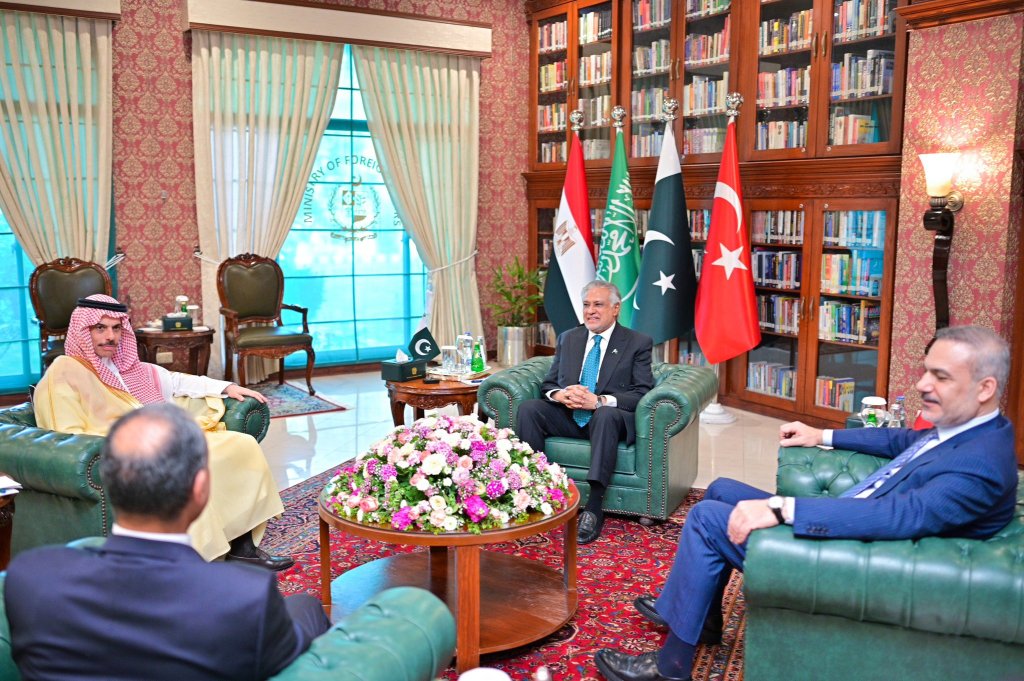
The announcement came after a quadrilateral meeting in Islamabad that brought together the foreign ministers of Saudi Arabia, Turkey, and Egypt — Prince Faisal bin Farhan Al Saud, Hakan Fidan, and Badr Abdelatty, respectively.
The four nations unanimously endorsed Pakistan’s initiative and agreed to form a committee of senior officials to coordinate follow-up modalities.
The visiting foreign ministers “expressed their full support” for potential US-Iran talks in Islamabad, Dar said, adding that they “advocated dialogue and diplomacy as the only viable pathway to prevent conflict and to promote regional peace and harmony.”
Prime Minister Shehbaz Sharif, who met separately with the visiting diplomats, emphasized Pakistan’s readiness to play a constructive role. Sharif called for collective international efforts to de-escalate tensions, noting that continued conflict is causing significant loss of life and economic damage across the region.
The diplomatic push comes as the US-Israeli war on Iran has triggered widespread instability and disrupted global energy markets. According to reports, over 1,300 deaths have been recorded since the conflict began on February 28, with retaliatory strikes continuing to impact maritime traffic through the strategically vital Strait of Hormuz.
International Backing
Dar said he has spoken with Chinese Foreign Minister Wang Yi and United Nations Secretary-General Antonio Guterres, both of whom “fully support” Pakistan’s push for peace. The initiative has also garnered backing from other governments around the world, he added.
China’s endorsement carries particular weight given its close economic ties with Iran and its role as a major energy consumer. The Strait of Hormuz, through which approximately 20% of the world’s oil passes, remains a critical concern for global energy security.
Complex Challenges Remain
Despite the diplomatic momentum, analysts caution that significant obstacles lie ahead.
Tehran has publicly dismissed some overtures, with Iranian parliament speaker Mohammad Bagher Qalibaf linking proposed talks to recent US military movements in the region. He said Iranian forces were “waiting for the arrival of American troops on the ground to set them on fire and punish their regional partners forever,” according to state media.
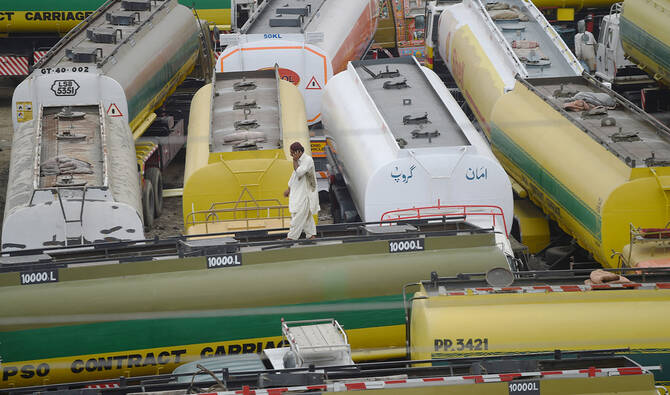
A reported 15-point ceasefire proposal sent by Washington to Tehran through Pakistan has already been rejected by Iran, with the status of the Strait of Hormuz remaining a major sticking point. Only limited tanker movement has been allowed, with countries such as China, India, and Pakistan receiving special consideration.
Shuja Nawaz, founder director of the South Asia Center at the Atlantic Council, described Pakistan’s task as “challenging.”
“The real challenge for Pakistan is to bring together a single person in the White House who changes his mind frequently and an Iranian government that is debating whether to fight a long war or find an end to its economy being further devastated,” Nawaz told AFP.
Strategic Ambiguity
Adding to the complexity, Pakistan’s Foreign Ministry has introduced some ambiguity regarding its precise role.
Spokesperson Tahir Andrabi recently refrained from clearly defining whether Islamabad acts as a mediator, facilitator, or messenger, stating he had “no information” on whether a US proposal had been formally conveyed to Iran.
Washington has reportedly ruled out hosting direct talks in Islamabad due to security concerns, though Pakistani officials have firmly rejected such claims.
“Pakistan is very safe and secure,” Andrabi said, dismissing concerns about the country’s suitability as a venue.
Pakistan’s Stakes
Pakistan’s mediation effort is driven by significant national interests. The country relies heavily on oil and gas imports through the Strait of Hormuz, and continued disruption threatens fuel supplies and could intensify inflationary pressures at home.
In a positive development, Dar announced Saturday that Iran has agreed to allow 20 more Pakistani-flagged vessels — two ships daily — to pass through the strategic waterway.
“This is a welcome and constructive gesture by Iran and deserves appreciation. It is a harbinger of peace and will help usher stability in the region,” Dar said.
Looking Ahead
Sunday’s consultations marked the second round among the four nations, following their initial meeting in Riyadh on March 19.
While Tehran has not joined official US talks, it has relayed responses to American proposals through Islamabad, according to Iranian media.
Germany’s Foreign Minister Johann Wadepuhl said Friday that he expects a direct US-Iran meeting in Pakistan “very soon.”
However, analysts note that Israel’s autonomous decision-making could complicate any Trump administration effort to claim victory and end the conflict.
Retired Air Commodore Khalid Chishti highlighted the delicate balance Pakistan must maintain: “Supporting defense-pact ally Saudi Arabia must not make Iran feel abandoned. Maintaining balance is challenging, but our efforts so far have been constructive and appreciated.”
As the conflict continues to disrupt global energy markets and threaten wider regional escalation, Pakistan’s initiative represents one of the most concrete diplomatic efforts to date.