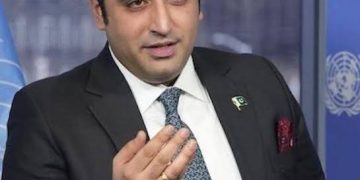


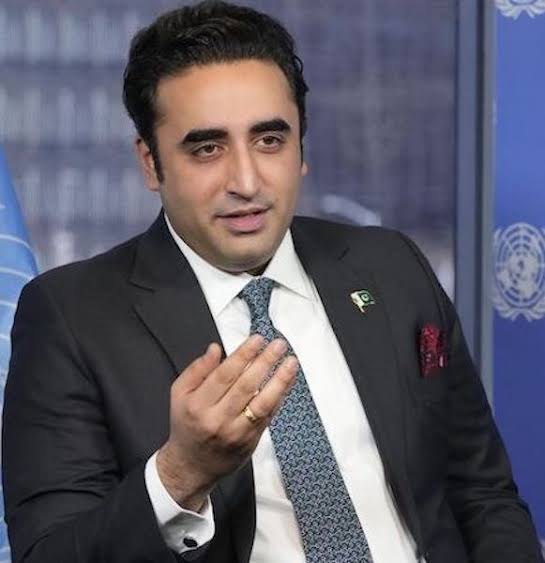
- Chairman PPP Bilawal Bhutto Zardari clarified his previous statement regarding the 27th Constitutional Amendment.
- He said that the amendment was passed by a two-thirds majority.
- According to him, ‘brute majority’ meant the absence of broad political consensus, not forced legislation.
- Bilawal described the 1973 Constitution and the 18th Amendment as examples of broad consensus.
- He stressed the need for further consultation and reforms to overcome the opposition’s distrust of the judicial system.
MULTAN: Pakistan Peoples Party Chairman Bilawal Bhutto Zardari has clarified his previous statement regarding the passage of the 27th Constitutional Amendment, ‘brute majority’, saying that his words were misrepresented. He said that the amendment was passed by a two-thirds majority in parliament, but constitutional amendments passed with broad political consensus are stronger.
Addressing Meet the Press at Multan Press Club on Thursday, Bilawal Bhutto said that an attempt was made to make his statement controversial, although his intention was to make it clear that the 27th Constitutional Amendment did not receive a broad consensus like the 1973 Constitution and the 18th Amendment.
He said that the approval of the 27th Constitutional Amendment by a two-thirds majority was a success, while also calling the equal representation of all provinces in the courts an important development.
The PPP chairman, however, said that the opposition’s distrust in the judicial system could not be ignored. According to him, there was a need to consider how trust in the judiciary could be restored through political and legal consultations.
Bilawal clarified that his position is not to abolish the constitutional amendment but to hold talks with all the stakeholders to address the concerns raised in this regard.
Referring to the 1973 Constitution and the 18th Constitutional Amendment, he said that a major reason for their strength was broad political consensus. According to him, the same approach needs to be adopted for future constitutional and democratic reforms.
Bilawal also termed electoral reforms as essential for political stability and said that all political parties, including the government and the opposition, should play an effective role in the parliamentary process.
Describing the Pakistan Tehreek-e-Insaf as a political reality, he said that it is necessary to include all major political forces in the consultation process for the improvement of the democratic and political system in the country.
According to him, solutions to the political and economic problems facing the country should be sought through parliament, while the process of any change in the system should proceed in a democratic and political manner.
We welcome your contributions to The Pakistan Observer, Submit your blogs, articles, press releases, news story pitches and news features.
Please send your submissions to our News Room or Editorial team.