

Summary: According to the annual report of the State Bank of Pakistan, the country’s economy showed stability during the fiscal year 26 despite internal and global challenges. The central bank has forecasted GDP growth rate to be 3.5 to 4.5 percent in fiscal year 27. Due to strong remittances, the current account deficit remained limited to 0.1 percent of GDP, while inflation is expected to gradually decline. The report also warns of potential risks to the agriculture sector due to El Nino.
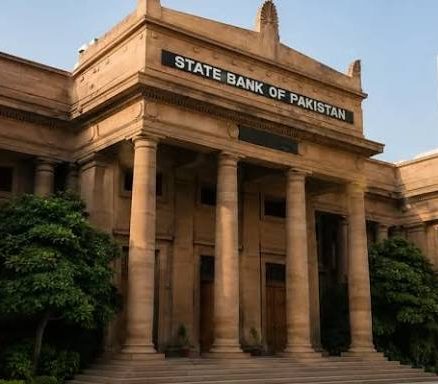
Karachi: The State Bank of Pakistan (SBP) has said that the country’s economy showed improvement and stability during the fiscal year 26 despite internal difficulties and global economic uncertainty, while the growth rate of gross domestic product (GDP) in the fiscal year 27 is expected to be 3.5 to 4.5 percent.
According to the annual report for fiscal year 2026 issued by the central bank, prudent monetary policy, fiscal discipline and economic reforms played a significant role in keeping the country’s economy stable.
The report said that the revival in large-scale manufacturing was a major driver of economic growth. The increase in industrial activities also supported other sectors of the economy.
However, due to the improvement in domestic economic activities, the volume of imports also increased, while global conditions maintained pressure on export performance.
According to the State Bank, the current account deficit was limited to only 0.1 percent of GDP during fiscal year 2026 due to a strong increase in remittances from overseas Pakistanis, which supported the external payments situation.
The central bank said that there was also a significant improvement in foreign exchange reserves. The external financial situation stabilized due to the purchase of foreign exchange by the State Bank, reduction in advance liabilities and the inflow of government financial support.
According to the report, the government’s efforts to control spending and reduce interest payments on debt have also improved the fiscal situation.
Regarding inflation, the State Bank said that during FY26, the inflation rate remained mostly close to the upper limit of the medium-term target of 5 to 7 percent, but the increase in energy prices due to the conflict in the Middle East increased the pressure on inflation from April 2026.
The central bank expects inflation to gradually decline to the medium-term target range during FY27, but rising energy and other commodity prices in the global market could pose a threat to this progress.
The report has described the worsening El Nino situation as a potential threat to Pakistan’s agriculture sector. This may increase concerns about climate change, unusual weather and reduced agricultural production.
Nevertheless, an increase in the production of major kharif crops, including sugarcane, rice and maize, was recorded compared to the previous year.
According to the State Bank, the current account deficit is likely to remain between zero and one percent of GDP in FY27. Continued growth in remittances and government financial support can help further improve foreign exchange reserves.
The report also emphasizes that economic stability alone is not enough for long-term growth, but sustainable economic growth requires private sector investment, improvement in industrial structure, development of basic facilities and increase in workforce skills.
The central bank also identified low female employment rate, youth unemployment and slow pace of industrial growth as key challenges for the economy.
According to the State Bank, Pakistan can move towards long-term and sustainable economic growth through consistent economic policies, tax reforms, improved business environment and investment in productive sectors.
We welcome your contributions to The Pakistan Observer, Submit your blogs, articles, press releases, news story pitches and news features.
Please send your submissions to our News Room or Editorial team.