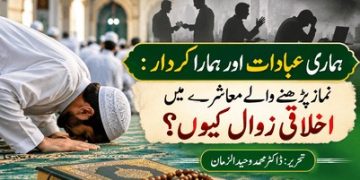


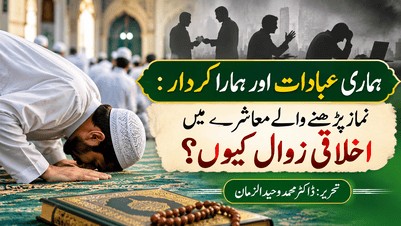
ہماری عبادات اور ہمارا کردار: نماز پڑھنے والے معاشرے میں اخلاقی زوال کیوں؟
آج ہمارے شہر کی ہر مسجد نمازیوں سے بھری ہے، مگر بازار میں ملاوٹ، دفتر میں رشوت، گھر میں بدزبانی اور سوشل میڈیا پر جھوٹ و بہتان بھی عام ہے۔ سوال یہ ہے کہ جس نماز کو قرآن نے برائی سے روکنے والی عبادت کہا، وہ ہمیں روک کیوں نہیں رہی؟ کیا نماز میں خرابی ہے، یا نماز کے ساتھ ہمارے تعلق میں؟ آج اسی سوال پر غور کرنا ہے۔
قرآن کا معیار:
اسی لیے قرآن نے کامیابی کی شرط صرف نماز نہیں بلکہ خشوع والی نماز رکھی: قَدْ أَفْلَحَ الْمُؤْمِنُونَ الَّذِينَ هُمْ فِي صَلَاتِهِمْ خَاشِعُونَ (المؤمنون ۱-۲)۔
اور بنی اسرائیل کو تنبیہ کی گئی: أَتَأْمُرُونَ النَّاسَ بِالْبِرِّ وَتَنسَوْنَ أَنفُسَكُمْ “کیا تم لوگوں کو نیکی کا حکم دیتے ہو اور اپنے آپ کو بھول جاتے ہو؟” (البقرہ ۴۴)۔
حدیثِ نبوی ﷺ کا معیار:
“میری امت کا مفلس وہ ہے جو قیامت کے دن نماز، روزہ اور زکوٰۃ لے کر آئے گا، مگر اس نے کسی کو گالی دی ہوگی، کسی پر تہمت لگائی ہوگی، کسی کا مال کھایا ہوگا، کسی کا خون بہایا ہوگا اور کسی کو مارا ہوگا۔ پس اس کی نیکیاں ان مظلوموں میں بانٹ دی جائیں گی، اور نیکیاں ختم ہو گئیں تو ان کے گناہ اس پر ڈال کر جہنم میں پھینک دیا جائے گا” (صحیح مسلم، حدیث ۲۵۸۱)۔
ایک صحابی نے عرض کیا: یا رسول اللہ! فلاں عورت کثرت سے نماز، روزہ اور صدقہ کرتی ہے مگر اپنی زبان سے پڑوسیوں کو تکلیف دیتی ہے۔ فرمایا: هِيَ فِي النَّارِ “وہ جہنم میں ہے”۔ پھر دوسری کا ذکر ہوا جس کی عبادت کم تھی مگر پڑوسیوں کو ایذا نہ دیتی تھی، فرمایا: هِيَ فِي الْجَنَّةِ (مسند احمد، حدیث ۹۶۷۵؛ صحیح ابن حبان؛ علامہ البانی نے اسے صحیح قرار دیا)۔
اور فرمایا: إِنَّمَا بُعِثْتُ لِأُتَمِّمَ مَكَارِمَ الْأَخْلَاقِ “مجھے تو اخلاق کی تکمیل کے لیے بھیجا گیا ہے” (الادب المفرد للبخاری، حدیث ۲۷۳)۔
نیز مَا مِنْ شَيْءٍ أَثْقَلُ فِي مِيزَانِ الْمُؤْمِنِ يَوْمَ الْقِيَامَةِ مِنْ خُلُقٍ حَسَنٍ “قیامت کے دن مومن کے ترازو میں حسنِ اخلاق سے زیادہ بھاری کوئی چیز نہ ہوگی” (جامع الترمذی، حدیث ۲۰۰۲)۔
اور منافق کی نشانیاں بتائیں: جب بات کرے تو جھوٹ بولے، وعدہ کرے تو خلاف ورزی کرے، امانت دی جائے تو خیانت کرے (صحیح البخاری، حدیث ۳۳؛ صحیح مسلم، حدیث ۵۹)۔
سیرتِ طیبہ:
مکہ کے مشرکین نبی ﷺ کی دعوت کے مخالف تھے، مگر اپنی امانتیں انہی کے پاس رکھواتے تھے کیونکہ آپ ﷺ “الصادق الامین” مشہور تھے۔ ہجرت کی رات جب دشمن گھر کا محاصرہ کیے کھڑے تھے، آپ ﷺ نے حضرت علی رضی اللہ عنہ کو پیچھے چھوڑا تاکہ لوگوں کی امانتیں لوٹا کر آئیں (سیرت ابن ہشام، ذکرِ ہجرت)۔ یعنی جان کے خطرے میں بھی امانت کی ادائیگی عبادت کا حصہ رہی۔
جب مہاجرین کو حبشہ میں بادشاہ نجاشی کے سامنے اسلام کا تعارف کرانا پڑا تو حضرت جعفر بن ابی طالب رضی اللہ عنہ نے نماز کی تفصیل نہیں، بلکہ یہ بتایا کہ ہمارے نبی ﷺ ہمیں سچ بولنے، امانت ادا کرنے، صلہ رحمی اور پڑوسی سے حسنِ سلوک کا حکم دیتے ہیں (مسند احمد، حدیث ۱۷۴۰)۔ اسلام کی پہچان اس کا کردار بنا۔
فقہاء، محدثین اور صالحین:
امیرالمومنین حضرت عمر بن الخطاب رضی اللہ عنہ کے سامنے ایک شخص نے دوسرے کی گواہی میں کہا کہ وہ نیک آدمی ہے۔ حضرت عمر نے پوچھا: کیا تم اس کے پڑوسی رہے ہو؟ کیا تم نے اس کے ساتھ درہم و دینار کا لین دین کیا ہے؟ کیا اس کے ساتھ سفر کیا ہے؟ اس نے کہا: نہیں۔ فرمایا: پھر تم اسے نہیں جانتے، جاؤ کسی ایسے کو لاؤ جو جانتا ہو (السنن الکبریٰ للبیہقی، کتاب الشہادات؛ امام غزالی نے بھی اسے احیاء العلوم میں نقل کیا)۔ یعنی کسی کی دینداری نماز کی لمبائی سے نہیں، معاملات سے پرکھی جاتی ہے۔
امام ابو حنیفہ رحمہ اللہ تاجر تھے۔ منقول ہے کہ آپ نے اپنے شریک کو کپڑے کا ایک تھان بیچنے بھیجا اور تاکید کی کہ خریدار کو اس کا عیب ضرور بتانا۔ شریک عیب بتانا بھول گیا اور خریدار کا پتا بھی نہ رہا تو امام صاحب نے اس سودے کی پوری رقم صدقہ کر دی (الموفق المکی، مناقب الامام الاعظم ابی حنیفہ)۔ یہ ہے وہ فقیہ جس کے نام پر ہم فقہ پڑھتے ہیں۔
امام حسن بصری رحمہ اللہ کا قول امام غزالی نے نقل کیا ہے کہ جس نماز میں دل حاضر نہ ہو وہ سزا کے زیادہ قریب ہے (احیاء علوم الدین، کتاب اسرار الصلاۃ)۔
خلافت حضرت ابو بکر صدیق رضی اللہ عنہ کا واقعہ ہے۔ حضرت عمر رضی اللہ تعالیٰ عنہ روزانہ صبح کی نماز حضرت صدیق اکبر رضی اللہ تعالیٰ عنہ کے پیچھے پڑھتے۔ حضرت ابوبکر نماز کے فوری بعد کہیں روانہ ہوجاتے۔ حضرت عمر رضی اللہ تعالیٰ عنہ اس بات کو اکثر نوٹ کرتے۔ وہ دیکھ رہے تھے کہ ابوبکر رضی اللہ عنہ نماز کی ادائیگی کے لیے تو باقاعدگی سے مسجد میں آتے ہیں مگر جونہی نماز ختم ہوتی وہ چپکے سے مدینہ کے مضافاتی علاقوں میں ایک دیہات کی طرف نکل جاتے ہیں۔ کئی بار ارادہ بھی کیا کہ سبب پوچھ لیں مگر ایسا نہ کر سکے…
ایک بار وہ چپکے سے حضرت ابوبکر رضی اللہ عنہ کے پیچھے چل دیے۔ سیدنا ابوبکر رضی اللہ عنہ دیہات میں جا کر ایک خیمے کے اندر چلے گئے۔ کافی دیر کے بعد جب وہ باہر نکل کر واپس مدینے کی طرف لوٹ گئے تو حضرت عمر رضی اللہ عنہ اس خیمے میں داخل ہوئے۔ کیا دیکھتے ہیں کہ خیمے میں ایک اندھی بڑھیا دو چھوٹے چھوٹے بچوں کے ساتھ بیٹھی ہوئی ہے۔
حضرت عمر رضی اللہ عنہ نے بڑھیا سے پوچھا: اے اللہ کی بندی! تم کون ہو؟ بڑھیا نے جواب دیا: میں ایک نابینا اور مفلس و نادار عورت ہوں۔ ہمارے والدین ہمیں اس حال میں چھوڑ کر فوت ہو گئے ہیں کہ میرا اور ان دو لڑکیوں کا اللہ کے سوا کوئی اور آسرا نہیں ہے۔
حضرت عمر رضی اللہ عنہ نے پھر سوال کیا: یہ شیخ کون ہے جو تمہارے گھر میں آتا ہے؟ بوڑھی عورت، جو حضرت ابوبکر رضی اللہ عنہ کی اصلیت نہیں جانتی تھی، نے جواب دیا کہ میں اس شیخ کو جانتی تو نہیں مگر یہ روزانہ ہمارے گھر میں آکر جھاڑو دیتا ہے، ہمارے لیے کھانا بناتا ہے اور ہماری بکریوں کا دودھ دھوتا ہے اور یہاں ہمارے پاس رکھ کر چلا جاتا ہے۔
حضرت عمر یہ سن کر رو پڑے اور کہا: اے ابوبکر! آپ نے اپنے بعد آنے والے حکمرانوں کے لیے ایک تھکا دینے والا امتحان کھڑا کر کے رکھ دیا ہے۔ آپ کے بعد آنے والے خلیفہ اس امتحان میں کیسے کامیاب ہوں گے؟
خشوع و خضوع:
امام شاہ ولی اللہ دہلوی رحمہ اللہ نماز کو تجلی الٰہی قرار دیتے ہیں۔ حضرت امام عبید اللہ سندھی رحمہ اللہ فرماتے ہیں کہ رکوع دراصل ذمہ داری کو قبول کرنے کا اظہار ہے اور سجدہ اس بات کا اقرار ہے کہ میں اللہ تعالیٰ کی بڑائی کا اعتراف کرتا ہوں۔
ہم میں سے بہت سے لوگ روزانہ آفس میں میٹنگ کرتے ہیں اور اس میٹنگ میں ان کی شمولیت جسمانی اور ذہنی دونوں لحاظ سے ہوتی ہے۔ اور کیوں نہ ہو، اگر ایسا نہیں کریں گے تو یا تو نوکری کا خطرہ ہے یا سالانہ رپورٹ متاثر ہو سکتی ہے اور یہ پروفیشنلزم کے بھی خلاف ہے۔ تو جو رب ہماری زندگی کا مالک ہے، جو دنیا جہاں کی دولت و ثروت جس کی ہے، اس سے ملاقات کرتے ہوئے ہم کیوں ذہنی طور پر حاضر نہیں رہتے؟
اگر ہم اس نماز کو احکم الحاکمین سے اپنی ملاقات سمجھ لیں تو ہمیں تو الرٹ ہونا چاہیے اور دو نمازوں کے درمیان کیے گئے کام کی رپورٹ پیش کرنی ہے۔ خود احتسابی کا مظاہرہ کرتے ہوئے اپنی کوتاہیوں پر معافی مانگنی ہے اور جذبے کے ساتھ یہ عزم کرنا ہے کہ اے اللہ! میں اب اپنی ذمہ داریاں احسن طریقے سے نبھاؤں گا۔
زوال کے اسباب:
- نماز کو محض رسم سمجھ لیا گیا، خشوع اور معنی سے ناواقفیت رہی۔
- عبادات اور معاملات کو الگ خانوں میں بانٹ دیا گیا، گویا مسجد کے باہر شریعت معطل ہے۔
- حرام کمائی کی فکر ختم ہو گئی۔
- ریاکاری اور دکھاوا۔
- نماز کے بعد محاسبۂ نفس کا ترک۔
پکے نمازی کیسے بنیں؟
- نماز کا ترجمہ سیکھیں: جو بات سمجھ آئے گی وہ دل میں اترے گی؛ ہر نماز میں کم از کم ایک آیت یا دعا کا مفہوم ذہن میں رکھیں۔
- اذان سنتے ہی سب چھوڑ دیں: حضرت عائشہ رضی اللہ عنہا فرماتی ہیں کہ نبی ﷺ گھر کے کام میں ہوتے اور اذان ہوتی تو فوراً نماز کے لیے نکل جاتے (صحیح البخاری، حدیث ۶۷۶)۔
- جماعت کی پابندی کریں: جماعت کی نماز تنہا نماز سے ستائیس درجے افضل ہے (صحیح البخاری، حدیث ۶۴۵)۔
- گھر والوں اور بچوں کو ساتھ لیں: فرمایا: بچوں کو سات سال کی عمر میں نماز کا حکم دو (سنن ابی داود، حدیث ۴۹۵)۔
- سنتوں کا اہتمام کریں: جو بارہ رکعات سنتِ مؤکدہ کی پابندی کرے اس کے لیے جنت میں گھر بنایا جاتا ہے (صحیح مسلم، حدیث ۷۲۸)۔
- ہر نماز کے بعد ایک منٹ محاسبہ: آج زبان، کمائی اور برتاؤ میں کیا غلط ہوا؟ اس پر توبہ اور اصلاح کا عزم کریں۔
- صالحین کی صحبت اور دعا: رَبِّ اجْعَلْنِي مُقِيمَ الصَّلَاةِ وَمِن ذُرِّيَّتِي (ابراہیم ۴۰)۔
اللہ تعالیٰ ہمیں پکا سچا نمازی بننے کی توفیق عطا فرمائے اور ہماری نمازوں سے ہمارے دلوں کو بدل دینے والی نصیحت و تقویٰ عطا فرمائے۔ آمین۔
Our Worship and Our Character: Why Is Moral Decline Widespread in a Society of Worshippers?
Today, every mosque in our cities is filled with worshippers. Yet adulteration is common in markets, bribery in offices, abusive language in homes, and lies and slander on social media. The question is: if the Quran describes prayer as an act of worship that prevents wrongdoing, why does it not seem to stop us? Is there something wrong with prayer, or with our relationship with prayer? This is the question we need to reflect upon today.
The Quranic Standard
إِنَّ الصَّلَاةَ تَنْهَىٰ عَنِ الْفَحْشَاءِ وَالْمُنكَرِ
“Indeed, prayer restrains from immorality and wrongdoing” (Surah Al-Ankabut, 29:45).
The very purpose of prayer is to build character. If wrongdoing continues even after prayer, it means that prayer has been reduced to physical movements and gestures, while its spirit has disappeared.
That is why the Quran identifies success not merely with prayer, but with prayer performed with humility and devotion:
قَدْ أَفْلَحَ الْمُؤْمِنُونَ الَّذِينَ هُمْ فِي صَلَاتِهِمْ خَاشِعُونَ
“Successful indeed are the believers, those who are humble and attentive in their prayers” (Surah Al-Mu’minun, 23:1–2).
فَوَيْلٌ لِّلْمُصَلِّينَ الَّذِينَ هُمْ عَن صَلَاتِهِمْ سَاهُونَ الَّذِينَ هُمْ يُرَاءُونَ وَيَمْنَعُونَ الْمَاعُونَ
“So woe to those who pray, yet are heedless of their prayers, those who show off and withhold even small acts of kindness from others” (Surah Al-Ma’un, 107:4–7).
The Children of Israel were also admonished:
أَتَأْمُرُونَ النَّاسَ بِالْبِرِّ وَتَنسَوْنَ أَنفُسَكُمْ
“Do you command people to do good while forgetting yourselves?” (Surah Al-Baqarah, 2:44).
The Standard Set by the Prophet’s Hadith ﷺ
The Prophet ﷺ said:
إِنَّ الْمُفْلِسَ مِنْ أُمَّتِي مَنْ يَأْتِي يَوْمَ الْقِيَامَةِ بِصَلَاةٍ وَصِيَامٍ وَزَكَاةٍ، وَيَأْتِي قَدْ شَتَمَ هٰذَا وَقَذَفَ هٰذَا وَأَكَلَ مَالَ هٰذَا وَسَفَكَ دَمَ هٰذَا وَضَرَبَ هٰذَا۔
“The truly bankrupt person from my Ummah is the one who will come on the Day of Judgment with prayers, fasting and zakat, but will also have insulted someone, falsely accused another, unlawfully consumed someone’s wealth, shed someone’s blood and beaten another person. His good deeds will then be distributed among those he wronged… and he will be cast into Hell” (Sahih Muslim, Hadith 2581).
A companion once asked the Prophet ﷺ about a woman who performed many prayers, fasted frequently and gave charity, but hurt her neighbours through her words. The Prophet ﷺ replied: هِيَ فِي النَّارِ — “She is in the Fire.”
He was then told about another woman whose acts of worship were fewer, but who did not harm her neighbours. Regarding her, he said: هِيَ فِي الْجَنَّةِ — “She is in Paradise” (Musnad Ahmad, Hadith 9675; Sahih Ibn Hibban; declared authentic by Allama Al-Albani).
The Prophet ﷺ also said:
إِنَّمَا بُعِثْتُ لِأُتَمِّمَ مَكَارِمَ الْأَخْلَاقِ
“I was sent only to perfect noble character” (Al-Adab Al-Mufrad, Hadith 273).
He further said:
مَا مِنْ شَيْءٍ أَثْقَلُ فِي مِيزَانِ الْمُؤْمِنِ يَوْمَ الْقِيَامَةِ مِنْ خُلُقٍ حَسَنٍ
“Nothing will be heavier on a believer’s scale on the Day of Judgment than good character” (Jami’ al-Tirmidhi, Hadith 2002).
The Prophet ﷺ also described the signs of a hypocrite: when he speaks, he lies; when he makes a promise, he breaks it; and when entrusted with something, he betrays that trust (Sahih al-Bukhari, Hadith 33; Sahih Muslim, Hadith 59).
The Prophetic Example
The polytheists of Makkah opposed the Prophet’s ﷺ message, yet they continued to entrust their valuables to him because he was widely known as Al-Sadiq Al-Amin — the truthful and trustworthy one.
On the night of migration, when his enemies had surrounded his house, the Prophet ﷺ left Hazrat Ali (RA) behind so that he could return people’s entrusted belongings to their rightful owners (Seerah Ibn Hisham, account of the Hijrah).
This demonstrates that fulfilling one’s responsibilities and returning entrusted property remained an essential duty, even when one’s life was at risk.
When the Muslim migrants had to explain Islam before King Negus in Abyssinia, Hazrat Ja’far ibn Abi Talib (RA) did not focus on the details of prayer. Instead, he explained that their Prophet ﷺ taught them to speak the truth, fulfil trusts, maintain family ties and treat neighbours well (Musnad Ahmad, Hadith 1740). Islam was represented through its character and conduct.
Jurists, Hadith Scholars and Righteous People
A man once testified before the Commander of the Faithful, Hazrat Umar ibn al-Khattab (RA), that another person was a good and righteous individual.
Hazrat Umar (RA) asked him: “Have you been his neighbour? Have you conducted financial transactions with him? Have you travelled with him?”
The man replied that he had not. Hazrat Umar (RA) then said: “Then you do not truly know him. Bring someone who does” (Al-Sunan al-Kubra by Al-Bayhaqi, Book of Testimonies; also quoted by Imam Al-Ghazali in Ihya Ulum al-Din).
This teaches us that a person’s religious character cannot be judged by the length of their prayers alone. It must be assessed through their dealings with others.
Imam Abu Hanifa (RA) was a merchant. It is reported that he once sent his business partner to sell a piece of cloth and instructed him to disclose its defect to the buyer. His partner forgot to mention the defect, and the buyer could not be located afterwards. Imam Abu Hanifa (RA) therefore gave the entire amount earned from that transaction in charity (Al-Muwaffaq al-Makki, Manaqib al-Imam al-A’zam Abi Hanifa).
Imam Al-Ghazali also quoted a statement of Imam Hasan al-Basri (RA), according to which a prayer in which the heart is absent is closer to punishment than reward (Ihya Ulum al-Din, Book on the Secrets of Prayer).
There is also a well-known account from the caliphate of Hazrat Abu Bakr al-Siddiq (RA)… Hazrat Umar (RA) noticed that immediately after morning prayer, Abu Bakr (RA) would quietly leave and travel towards a village. Following him quietly one day, Hazrat Umar found that Abu Bakr visited a blind elderly woman with two children every day, swept her floor, prepared food, and milked her goats without revealing his identity. Upon witnessing this, Hazrat Umar wept and said, “O Abu Bakr! You have set an exhausting standard for those who will govern after you.”
Humility and Devotion in Prayer
Imam Shah Waliullah Dehlawi (RA) describes prayer as a manifestation of divine illumination. Hazrat Imam Ubaidullah Sindhi (RA) explains that bowing (ruku) represents the acceptance of responsibility, while prostration (sajdah) is an acknowledgment of Allah Almighty’s greatness.
Many of us attend office meetings every day, participating in them both physically and mentally. Yet when we stand before the Lord who owns our lives, why do we fail to remain mentally present?
If we understand prayer as a personal meeting with the Supreme Authority, we should remain fully attentive, perform self-accountability, and resolve: “O Allah, I will now fulfil my responsibilities in the best possible manner.”
Causes of Moral Decline
- Prayer has been reduced to a ritual, while humility, devotion and understanding of its meaning have been neglected.
- Worship and everyday dealings have been separated into different compartments, as if Islamic teachings cease to apply outside the mosque.
- Concern about earning through unlawful means has diminished.
- Showing off and performing acts of worship for public recognition have become common.
- Self-accountability after prayer has been abandoned.
How Can We Become Sincere and Consistent Worshippers?
- Learn the meaning of prayer: What we understand is more likely to enter our hearts. Reflect upon the meaning of at least one Quranic verse or supplication during every prayer.
- Respond to the call of prayer: Leave other activities when the Adhan is heard, just as the Prophet ﷺ did (Sahih al-Bukhari, Hadith 676).
- Observe congregational prayer: Prayer performed in congregation is twenty-seven times more rewarding than prayer performed alone (Sahih al-Bukhari, Hadith 645).
- Involve your family and children: Command your children to perform prayer at the age of seven (Sunan Abi Dawud, Hadith 495).
- Observe the Sunnah prayers: Whoever regularly performs the twelve prescribed Sunnah rak’ahs will have a house built for them in Paradise (Sahih Muslim, Hadith 728).
- Spend one minute in self-accountability after every prayer: Ask yourself what you did wrong today in your speech, earnings and behaviour, and seek forgiveness.
- Keep the company of righteous people and make supplications: Recite the Quranic prayer:
رَبِّ اجْعَلْنِي مُقِيمَ الصَّلَاةِ وَمِن ذُرِّيَّتِي
“My Lord, make me steadfast in prayer, and also from among my descendants” (Surah Ibrahim, 14:40).
May Allah Almighty grant us the ability to become sincere and steadfast in our prayers, and bless our worship with the guidance, piety and spiritual awareness that transform our hearts and character. Ameen.
We welcome your contributions to The Pakistan Observer, Submit your blogs, articles, press releases, news story pitches and news features.
Please send your submissions to our News Room or Editorial team.