
The United Nations was established in 1945, following the devastation of the Second World War, with the primary aim of preventing future conflicts, maintaining international peace and promoting cooperation among nations. Its founding vision was rooted in collective security, sovereign equality and the protection of human dignity. Yet, more than eight decades later, its institutional structure remains heavily influenced by the political realities of the post-war era.
The United States, Russia, China, the United Kingdom and France possess the authority to block substantive Security Council resolutions through the veto. Although this arrangement was originally intended to secure the cooperation of major powers and prevent another devastating global conflict, it has increasingly become an instrument through which national interests can take precedence over collective responsibility. Under Article 27 of the UN Charter, substantive Security Council decisions require nine affirmative votes, including the concurring votes of the permanent members.


The consequences of this arrangement are particularly troubling when the international community confronts wars, humanitarian emergencies and serious violations of international law. In such circumstances, the veto can prevent the Security Council from taking meaningful action, leaving millions of people exposed to prolonged suffering. When a single powerful nation can block a resolution despite substantial support from other member states, the principles of collective security and sovereign equality can appear seriously undermined.
The continued existence of the veto also weakens confidence in the United Nations, particularly among smaller and developing nations, including African countries and Palestine. These countries are expected to respect international law and participate in collective decision-making, yet they have no equivalent power to prevent a permanent member from blocking a resolution. Such an arrangement creates a hierarchy among nations that is difficult to reconcile with the principle of sovereign equality.
Now the situation has entirely changed. The world of 1945 is no longer the world of today. The international community has expanded to 193 member states, while economic power, political influence and regional responsibilities have changed considerably. The emergence of new centres of power and the growing importance of developing countries make it increasingly difficult to justify a system in which five nations retain extraordinary authority over matters affecting the entire world.
The veto power must therefore be abolished or phased out, and the Security Council must be made more democratic, representative and accountable.
A practical alternative would be to replace the veto with a two-thirds majority voting system for substantive Security Council decisions. Under such an arrangement, resolutions would require broad support rather than the approval of every permanent member. No single country would be able to block collective action simply because a proposed resolution conflicted with its political or strategic interests.
A two-thirds majority would not eliminate disagreement or guarantee that every decision would be wise. However, it would ensure that decisions were based on substantial international support rather than the unilateral objection of one state.
Such reform must also address the question of representation. The Security Council should reflect the realities of the contemporary world rather than preserve the privileges established at the end of the Second World War. Developing countries, particularly those representing large populations and regions frequently affected by conflict, deserve a greater voice in decisions concerning international peace and security. Permanent membership should no longer be treated as an inherited privilege. A more equitable system could expand elected representation, strengthen regional participation and establish transparent criteria for selecting countries to serve on the Council.
At the same time, representation should not become another privilege reserved for wealthy or militarily powerful nations. Countries must be assessed through fair and transparent standards with meaningful opportunities for smaller states to participate.
Critics of veto abolition argue that major powers might refuse to cooperate with a Security Council whose decisions they oppose. They also warn that removing the veto could create new tensions or undermine international stability. However, the possibility of disagreement cannot justify preserving a system that, in the author’s view, repeatedly prevents collective action. The existing arrangement has its own dangers: it can deepen conflicts, weaken international institutions and encourage powerful states to believe that their interests will prevail over the principles of international law.
Reform must therefore be pursued through sustained diplomatic engagement and a broad international consensus. The United Nations Charter provides a framework for institutional change, but meaningful reform will require difficult negotiations among member states, including the permanent members themselves. Any formal change to the Charter would require the procedure set out in Article 108, including approval by two-thirds of the General Assembly and ratification by two-thirds of UN members, including all five permanent members. The challenge is substantial, but the difficulty of reform should not become an excuse for permanent inaction.
The United Nations was founded on the promise that future generations would be spared the devastation of war. That promise cannot be fulfilled if its most powerful institution remains paralysed whenever the interests of a permanent member are at stake.
Reforming the Security Council is therefore not simply a matter of institutional efficiency. It is a question of justice, equality and the credibility of the international order. The world needs a United Nations that listens to all nations, applies international law consistently and places human welfare above narrow political interests.
The time has come to end the veto privilege, replace it with collective decision-making and build a United Nations that serves all humanity—not merely the interests of the powerful.
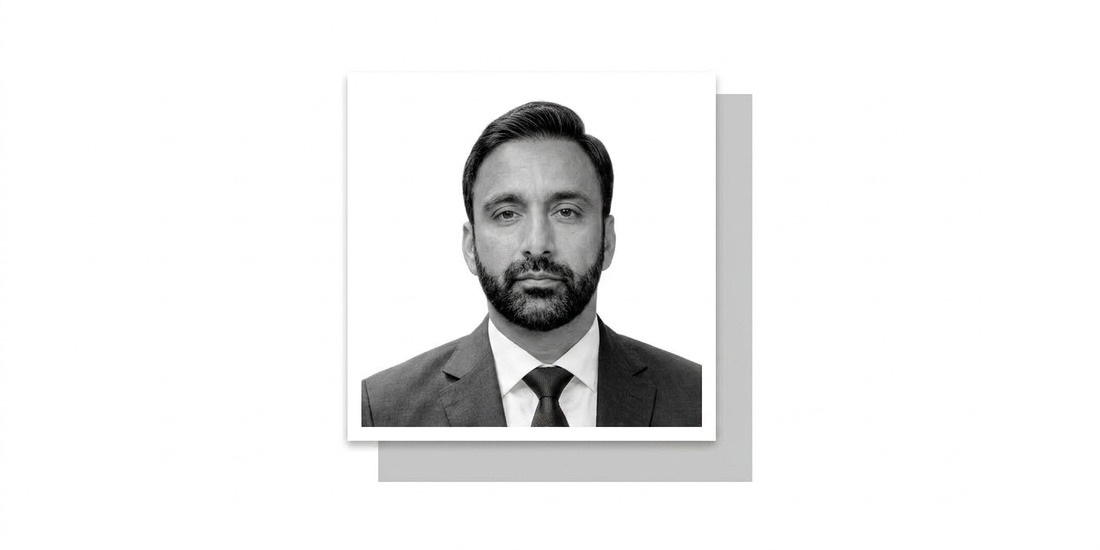
Mr Ghulam Mujtaba is a freelance writer and contributor who writes on international affairs, governance and contemporary issues.
We welcome your contributions to The Pakistan Observer. Submit your blogs, opinion pieces, press releases and news features to our editorial team.
Please send your submissions to our News Desk or Editorial team. We look forward to hearing from writers, journalists and contributors.