

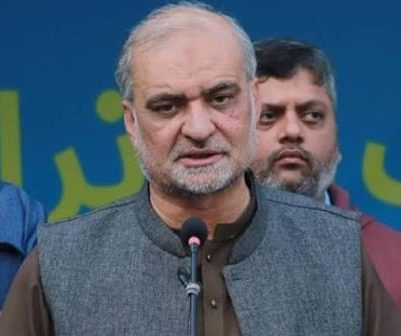
Islamabad: Jamaat-e-Islami chief Hafiz Naeem-ur-Rehman has announced to expand the scope of the protest to a nationwide strike if there is no progress in talks with the government. He says that practical progress on public demands is necessary, otherwise Jamaat-e-Islami will start the next phase of the protest.
Hafiz Naeem-ur-Rehman also criticized the current government system. According to him, Jamaat-e-Islami’s struggle is not limited to inflation or petroleum prices, but it wants a fundamental change in the system.
He claimed that the current political and administrative structure benefits the influential classes more. He said that the common citizen should get an effective role in decision-making and governance.
Referring to the historical importance of September 6, the Jamaat-e-Islami chief said that the common people made extraordinary sacrifices for the defense of the country. According to him, national resources and the state system should also prioritize the public interest.
Hafiz Naeem-ur-Rehman also proposed a further reduction in interest rates. He claimed that a 3% reduction in the policy rate could reduce the burden of interest payments on the national exchequer.
He said that reducing the interest rate in stages would provide the government with financial space. According to him, its benefits could also be transferred to the people in the form of relief in various sectors.
The Jamaat-e-Islami chief also referred to Prime Minister Shehbaz Sharif’s previous promises regarding interest. He demanded that the government take practical steps on this issue.
Hafiz Naeem-ur-Rehman’s statement linked interest payments and government debt to national financial problems. However, the real financial impact of the interest rate cut will depend on the overall debt, policy rate and government fiscal decisions.
The Jamaat-e-Islami chief also raised questions on government incentives and expenditure of the bureaucracy. He said that senior officers should review the incentives they receive on large government houses, vehicles and other facilities.
He suggested that a limit of up to 1300 cc vehicles be set for government officers. According to him, officers can be free to choose their personal vehicles, but the use of government resources should be limited.
Hafiz Naeem called the proposal an example of reducing government expenditure. He also stressed the need for better and cheaper public transport, citing the travel difficulties of citizens.
The central demand of Jamaat-e-Islami’s recent protest campaign is relief in petroleum levy and fuel prices. The government and Jamaat-e-Islami have agreed to form technical committees on this issue.
According to reports, the two sides will start formal talks from Monday. Jamaat-e-Islami has made it clear that its sit-ins will continue even during the talks.
On September 3, Jamaat-e-Islami called a nationwide strike against the petroleum levy. Closure of markets and business centers was also reported in various cities, including Karachi. Incidents of arrests occurred during the protests at some places, to which Jamaat-e-Islami denied any involvement.
Hafiz Naeem-ur-Rehman said that if the talks do not yield an acceptable solution to the public demands, the Jamaat-e-Islami will go for a wheel jam strike. According to him, in this phase, efforts will be made to close down business activities across the country, including petrol pumps, shops and transport.
He had earlier also hinted at expanding the protest and using other political options, including a long march.
However, the phase of negotiations between the government and the Jamaat-e-Islami has now become crucial. In the next few days, it will be clear to what extent the two sides can agree on petroleum levy, fuel prices and other economic demands.
Jamaat-e-Islami is of the view that the people need immediate economic relief. The challenge for the government is to balance the financial impact of any concession with the national budget and the ongoing economic program.
In the absence of progress in the talks, the possibility of further widening the protest will be significant at both the political and economic levels. On the other hand, in the event of reconciliation, the government may find a clear path for economic decisions along with reducing public pressure.