

Islamabad: A briefing given to the Senate Standing Committee on Finance revealed that the country’s current crude oil reserves are sufficient for about 10 days, while LPG and LNG reserves can last for about 15 days. Officials have warned that there is a risk of the global supply chain being affected due to the ongoing tension in the Middle East; however, no emergency has been declared in the country at present.
Briefing the committee, Finance Minister Muhammad Aurangzeb said that the ongoing conflict between the US, Israel and Iran has created uncertainty at the global level. According to him, if this tension lasts long, global oil supply may be affected, which may have an impact on countries like Pakistan that depend on imported fuel.
He clarified that there is no shortage of fuel in the country at present and no decision has been taken on rationing. In response to a question from Committee Chairman Salim Mandviwala, the Finance Minister said that at present the government is not considering fuel rationing, as the existing reserves are sufficient to meet the requirements, but if the war or tension lasts long, the situation may take a serious turn.
Muhammad Aurangzeb appealed to the public to save on fuel consumption as a precautionary measure to avoid unnecessary pressure. He said that the government is constantly monitoring the situation and is fully prepared to deal with any emergency.
He further said that currently some cargo shipments are delayed in Qatar, which may increase pressure on the supply chain. To address this issue, the government has decided to increase production from local gas fields to reduce dependence on imported fuel.
The Finance Ministry has also decided that fuel reserves and global oil prices will be reviewed daily. Daily meetings will be held for this purpose so that quick decisions can be taken.
In a significant development, the Finance Minister said that Pakistan has formally requested Saudi Arabia to provide an alternative oil supply route after the possible closure of the Strait of Hormuz. According to him, the aim of this move is to secure the country’s fuel supply chain and avoid any possible disruption.
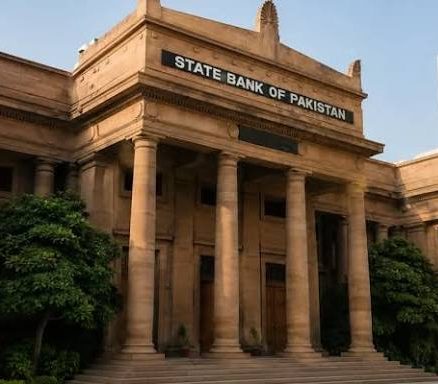
Meanwhile, State Bank of Pakistan Governor Jamil Ahmed has warned that if the price of oil in the global market reaches $100 per barrel, Pakistan may face additional pressure on the external account deficit and the value of the rupee.
According to economists, the rise in oil prices will not only increase the import bill but may also affect the inflation rate. Therefore, it is important for the government to take timely steps at the diplomatic and economic levels.
Currently, officials say that the situation is under control; however, precautionary measures will continue in view of the global situation.